Monthly Archives: June 2023

The Red Queen by Juan Gómez-Jurado

book cover

The weight on her chest lightens, her breathing slows. The ‘monkeys inside her head screech a little less loudly. That’s what is so brilliant about certainties, even fleeting ones. They offer us respite.

Police Inspector Jon Guttierez of the Bilbao PD, 43, is a large person, a weightlifter who lives with his mother. He ran into a spot of trouble recently when he attempted to plant evidence on a well-known drug dealer, only to be filmed in the act, said film going viral. Oopsy. He stands to lose a lot more than just his badge. When what to his wondering eyes should appear but a get-out-of-jail-free card, in the form of a mysterious personage known as Mentor. But Mentor has a tough, if unusual ask. He wants Jon to persuade someone to return to work. Someone who really, really does not want back in.
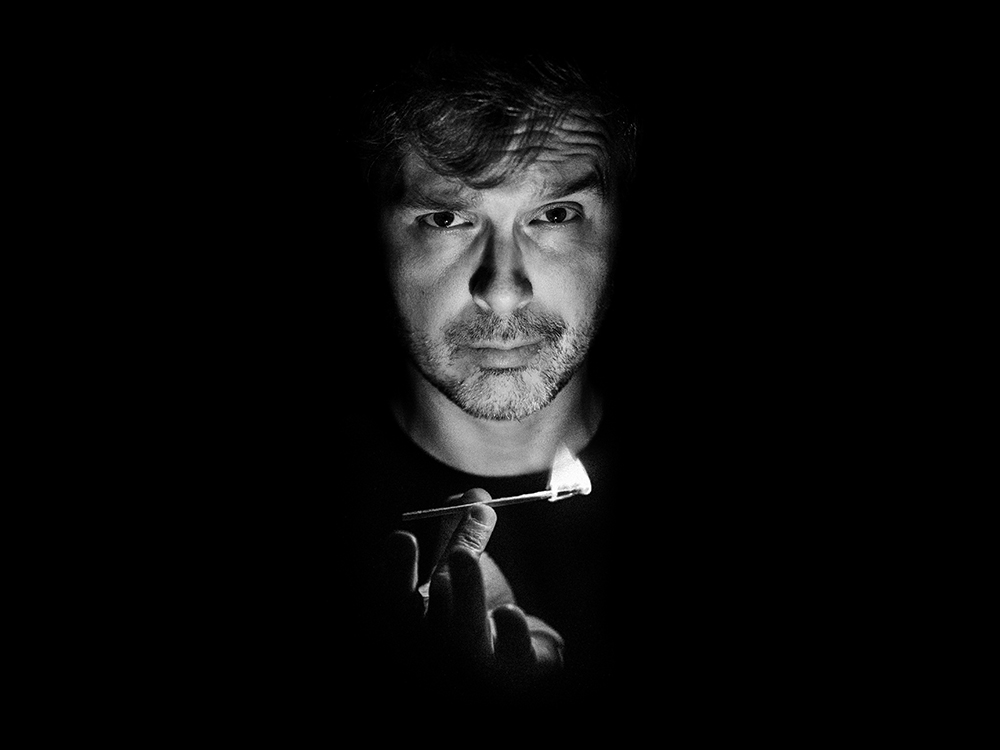
description
Juan Gómez-Jurado – image from Zenda

Antonia Scott (her father the British ambassador, her mother a Spaniard) spends three minutes of every day contemplating suicide. (Whatever works for ya, dear.) Her comatose beloved husband has been in a hospital bed for three years. She has been by his side throughout, clearly feeling some responsibility for his condition. (Antonia’s struggle is reminiscent of how JGJ felt when his father was dying during the writing of the book.) Antonia has regular chats with her English grandmother, who encourages her to put her particular set of skills to good use, instead of letting them go to waste. She has some superpowers, but also some limitations, one being a need for a certain medication when she is overwhelmed.

The inspiration for Antonia and Jon inevitably stems from Don Quixote and Sancho Panza. Antonia is that idealistic being, she does not hesitate to face the windmills, because she believes in a better world. Jon, on the other hand, is that pragmatist who has a dreamer hidden inside of him. – from the Hindustani interview

description
Vicky Luengo plays Antonia Scott in the Prime series – image from InStyle

Jon clearly succeeds in drawing Antonia out, or we wouldn’t have a book. And he becomes her partner. Not spoilers. It appears that Antonia is quite special indeed, with a mental capacity well beyond the norm. She had been a member of an elite international police organization, Red Queen, a network across Europe, one unit per country, each led by a Mentor. They exist outside the usual police structures, relying on the local constabulary for on-scene access and intel. Each unit uses a person with special gifts to help solve major crimes. Red Queens are selected for having a set of particular characteristics, which Antonia has. Uber-smart, amazing memory, analytical capacity just this side of a super-computer. (very Lisbeth Salander) But will she be smart enough to foil a criminal mastermind who has already murdered one child of the uber-rich, and has kidnapped another?

description
Hovik Keuchkerian plays Jon Guttierez in the Prime series – image from his Twitter profile

Alvaro Trueba, a teenager, has been dead several days, drained of blood, and laid out with bizarre religious iconography that is clear to the particularly perceptive. The kidnapper calls himself Ezekiel. The house in which his body was found, in a gated community, was one of several owned by his one-percenter parents.

Antonia and Jon must contend with the Abduction and Extortion Unit. (AEU), led by Captain Jose Luis Parra. Far too often, police stories have a dickish supervisor, tacking to political winds at every breeze, and getting in the way of actual investigators. Parra serves that role here, although as someone in a parallel, instead of superior role. He is not a totally incompetent team leader. Still, very dickish.

Just because we’re a unit created to avoid competition and secrets being kept between different police forces doesn’t mean we don’t repeat the same old mistakes.

Carlos Ortiz is the wealthiest man in the world. When his daughter, Carla, is kidnapped, he receives a call. His next call is to Red Queen, and Jon and Antonia are brought in, seeing the obvious connections between the cases.

The story is told in the 3rd person, primarily following Antonia and Jon as they track down leads in pursuit of the baddie. Once Carla is taken hostage, we flip back and forth between the investigation and her experience. There are occasional sidebar chapters in which we get a closer look at some of the supporting characters.

Red Queen is a particularly fun thriller to read. JGJ has a wonderfully droll (snotty?) sense of humor which permeates. Do not expect rolling on the floor hysterics, but you will smile and titter a lot. Jon gets all he knows about children from Modern Family reruns or When his sandwich arrives, Jon confirms that the hospital follows tradition: the grill they use must never be cleaned. Because she is fluent in many languages, Antonia often brings in obscure words or expressions from diverse cultures (aboriginal, South Ghanaian, and others) when that word is particularly descriptive of a situation. This is a wonderful bit, speaking to the limits of communication in a single language. There is also some intel on the ancient, unseen, infrastructure of Madrid, a nifty Dan-Brownish touch.

The supporting cast is also a plus. Corrupt security guards, a feisty nonagenarian granny, a tattoo artist who delights in disrespecting tourist customers, the testosterone-poisoned Captain Parra, an oily reporter, a mad scientist (I am not crazy; my reality is just different from yours.), and an evil baddie. The portrayal of criminal motivation and history was thin, but hopefully later volumes will flesh those out a bit more.

I was hesitant at first to read this one, as it is the opener of a trilogy. Would there be resolution at the end or a cliffhanger? The answer is yes. There are some things that remain to be resolved, but there is enough of an ending here to make it a viable stand-alone read. Every adventure requires a first step.

There are twists and turns aplenty, which always helps. And questions to be answered. Will Carla escape? Will Antonia and Jon uncover who is behind these crimes? Will the usual competitive misery from other forces interfere with the investigation? What is it the kidnappers want and why are those demands not being met? Will Antonia completely fall apart before they can complete their mission? (We’re all mad here)

You will want to know as you flip-flip-flip-flip through these pages. Red Queen is a good beginning at which to begin. I would urge you to go on till you come to the end, then stop. But of course, that will not be possible for most of us. We only received an English-language translation of Reisa Rosa in 2023. It was originally released in Spain in 2018. There are three books in the series. For those fluent in Spanish there will be no waiting, but for those of us who do not speak Spanish, let the panting begin for volumes two (Loba Negra or Black Wolf, due 3/12/24 from Minotaur) and three (Rey Blanco or White King, presumably a year later) in English translation. The trilogy has been a huge international hit. Prime has optioned the series for a Spanish-language production. In the video interview linked below, we learn that primary shooting has completed for at least five episodes. I would guess a probable release in late 2023 or in 2024. I wouldn’t wait, though. Red Queen is a perfect summer read, whatever color roses you might prefer.

A spasm of pure fear convulses Antonia’s body. Fear and loathing. Because she finally understands—with piercing, icy clarity—what has been going on from the very start.

Review posted – June 30, 2023

Publication date – March 14, 2023 – (English translation)
It was first published in Spanish on November 8, 2018

I received an ARE of Red Queen from Minotaur Books in return for a fair review, and releasing my hostage. Thanks, folks.

This review is cross-posted on Goodreads. Stop by and say Hi!

=======================================EXTRA STUFF

Links to Gomez-Jurado’s personal, FB, and Twitter pages

Profile– from EAE Business School

Juan Gómez-Jurado was born in Madrid in 1977. His interest in literature led him to pursue a career in Information Science. No one at TVE, Canal Plus, La Voz de Galicia or COPE Radio Station —where he has worked— could have imagined what he would become in time. It wasn’t until 2006, when he published his novel, God’s Spy, that his talent became known, not only in Spain, but all across the globe.
Since then, he hasn’t stopped writing. Contract with God, The Traitor’s Emblem, The Legend of the Thief, The Patient, Scar… Year after year, his books keep on coming out. No time to rest. And his success keeps on rising and he keeps on breaking records. The trilogy made up of Red Queen, Black Wolf and White King, was the first to have all three books among the best-selling books in Spain simultaneously. In fact, Red Queen has been the most read book in Spain for two years in a row now, which translates into more than two million copies sold.

Interviews
—–Murder by the Book – Live from Madrid: Juan Gomez-Jurado Presents, “The Red Queen” Hosted by Sara DiVello – video – 35:08 – almost all of this is about his writing process, with bits about this book here and there
—–Hindustan Times – Interview: Juan Gomez-Jurado, author, Red Queen by Arunima Mazumdar

Item of Interest from the author
—–Crime Reads – Excerpt – Jon trying to persuade Antonia to return to work

Items of Interest
—–Gutenberg – Alice’s Adventures in Wonderland by Lewis Carroll
—–Gutenberg – Through the Looking Glass by Lewis Carroll
—–Gutenberg – Don Quixote by Miguel de Cervantes Saavedra
—–Bookroo – quotes from Alice in Wonderland

The epigraph of the novel is a quote from Through the Looking Glass, the book title having been taken from that. So, it seemed fitting to sprinkle throughout the review quotes from that and from Alice’s Adventures in Wonderland. I used the Bookroo site above for that.
Leave a comment

Filed under Fiction, Mystery, Suspense, Thriller, Thriller

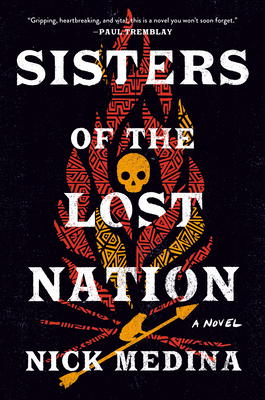
Sisters of the Lost Nation by Nick Medina

book cover

The spirit of a chief, you see, is a powerful thing. The skull became a head again when it was lifted from the grave . . . resurrected.”
“Resurrected?” she echoed.
“Alive again,” he said, his voice measured and grievously low, prolonging every word. “But not like it was before. Not like the old chief. It’s angry now that it’s been ripped from its rest. And ravenous. Hungry for revenge. It’ll eat anyone it encounters. It’ll tear flesh from bone.”
“How?” she said.
“It rolls, gathering mud and moss on its decaying flesh.”

Black bark to her sides and ash beneath her feet, she smelled the earthy odors of dirt, mud, burnt wood, and something so vile her stomach turned. It was the same smell the wind had wafted her way on the nights she’d been chased. Only the odor was stronger now. Inescapable.

Seventeen-year-old Anna Horn is terrified of two things. The first a magical, carnivorous head that gets around by rolling, and is possessed of a set of very nasty teeth. She believes it is determined to eat her. This is the result of a tale her Uncle Ray had told her ten years ago. Her terror about the rolling head permeates, as she fears its arrival every time there is a rustle in the bushes, the main difference in her experience of it being that she can flee faster at seventeen than she could at seven. The second is that she will never see her sister again. Fifteen-year-old Grace has joined the growing list of Native women gone missing.

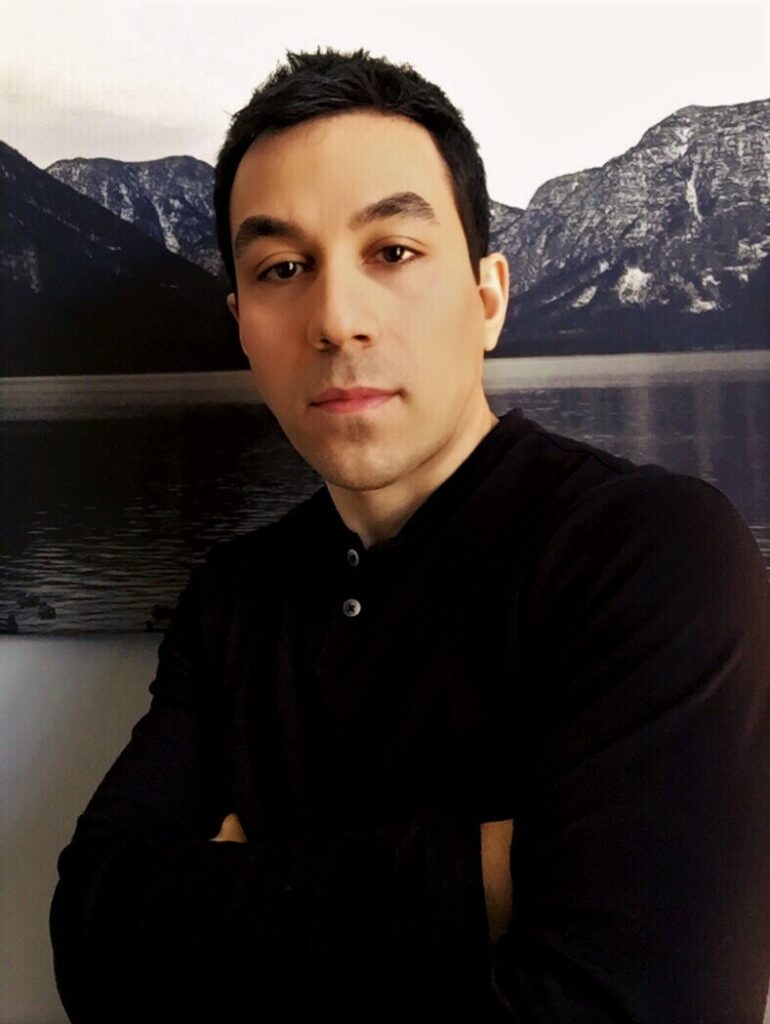
description
Nick Medina – image from Transatlantic Agency

Anna is in the throes of that perennial challenge of the teen-years, (for some of us, this challenge can go on for decades) figuring out who she is. She is way more mature than most of us were at that age, for sure. She does not exactly dress to impress, favoring her father’s old clothes, and sporting a very unfashionable short haircut. She loves the stories of her tribe, the fictional Takodas, to the point of wanting to start a historical preservation society, to save Takoda history, myths, and traditions for future generations. The considerate and kind classmates at her mostly white school completely understand and support her efforts at self-discovery. As if. They make her school experience a living hell, taking it further than unkind words. Grace is a very different sort, desperate to fit in, wanting attention, focusing on her looks and pleasing others in order to grease the way to hanging with the cool kids. Acquiring a cell phone is the key to her potential rise, and she will do whatever she can to get the money for one.

The story flips back and forth in time, moving forward from Anna’s Day 1 in showing how events came to be, and from the day of Grace’s disappearance, showing the investigation and results. Chapters are labeled in reference to days since Anna’s story begins. Grace does not go missing until well along in those days. Chapters looking at the search for Grace are also labeled with the number of hours since her disappearance.

Medina wanted to highlight the epidemic of Missing and Murdered Indigenous Women and Girls (WWIMG) that has been devastating Native communities for a long time. He shows the all-too-familiar problems residents of tribal lands face when someone goes missing, a viper’s nest of overlapping legal jurisdictions, inadequate police funding, and official indifference among them, not to mention racism. Speaking of which Medina portrays people of all shades as less then admirable. Even the Native manager of the casino assigns Native workers based on their skin color. Fox Ballard, nephew of the tribal leader, is young, handsome, flashy, sculpted, and not at all to be trusted.

Medina pays attention, as well to the impact of modernization on traditional values. The Takoda nation has been significantly changed by the opening of a casino on the reservation. The most obvious contrast is that of Anna (traditional) vs Grace (modern). The new road offers up a steady supply of splatted frogs, a pretty clear image of the cost of replacing treasured values with treasure. Income from the casino is making its way to all the people on the rez, although it is also clear that some Takoda are more equal than others.

As explained in the Author’s note that follows the book, the inspiration for the carnivorous rolling head came from actual Wintu and Cheyenne legends. It reminded me of the relentless ungulate in Stephen Graham Jones’s The Only Good Indians, except that the elk in Jones’s tale is seeking revenge, while the head, though our only real look at it is through Anna’s terrified eyes, seems a more open opportunity attacker. Frankly, scary as it seems to her, it cannot hold a candle to Graham’s hoofed-slasher. It may have been scary to Anna as a character, but did not cause me any lost sleep as a reader.

I did feel at times that this book read more like a YA story than a fully adult one, an observation, not a black mark. The greatest strength of the novel is Medina’s portrayal of his lead, Anna. It is in seeing her social challenges, following her passions, tracking her investigative efforts, admiring her bravery, and rooting for her to mature to a point where she is comfortable in her own skin, that we come to care about her. That alone makes this a good read. The added payload, about the core issue of the book, Missing and Murdred Indigenous Women, about the impact of modernization on traditional values, about gender identity, and about the impact of story on our lives, gives it a far greater heft.

This is Medina’s first novel. He refers to it as a “thriller with mythological horror.” It is an impressive beginning to what we hope is a long and productive career.

She said Frog exemplified transformation. He entered life in one form and left it in another. From egg to tadpole, to tadpole with legs, to amphibian with tail, to tailless frog, he was never the same. He began life in water, only emerging once he was his true self. He symbolized change, rebirth, and renewal, and his spirit could bring rain.
Anna stared down at the ill-fated frog. The reservation was transforming. The asphalt beneath her feet was evidence of that. And yet the very symbol of change had become a victim of it. The absurdity didn’t escape her.

Review posted – 6/23/23

Publication date – 4/18/23

I received an ARE of book name from publisher in return for a fair review. Thanks, folks. Can you get that thing to stop chasing me? And thanks to NetGalley for facilitating.

This review is cross-posted on Goodreads. Stop by and say Hi!

=======================================EXTRA STUFF

Links to the author’s personal, Instagram, and Twitter pages

PROFILE – from The Transatlantic Agency

A Chicago native, Nick Medina is an author and college professor of public speaking and multicultural communication…Nick’s first short story was published in 2009 and he has since had dozens more published by West Pigeon Press, Dark Highlands, and UnEarthed Press, in addition to outlets in the U.S. and the U.K., such as Midwest Literary Magazine, The Washington Pastime, The Absent Willow Review and Underground Voices.

Interviews
—–Paulsemel.com – Exclusive Interview: “Sisters Of The Lost Nation” Author Nick Medina – e-mail interview
—–#Poured Over – The B&N Podcast – Nick Medina on Sisters of the Lost Nation – by Marie Cummings – video – 48:04
—–Murder by the Book – Special Prelaunch Q&A: Nick Medina Presents “Sister of the Lost Nation” by Sara DiVello – video – 33:31
—–FanFiAddict – Author Interview: Nick Medina (Sisters of the Lost Nation) by Cassidee Lanstra

Items of Interest from the author
—–Tor.Com – Excerpt
—–CrimeReads.com – EXPLORING SOCIAL ISSUES THROUGH HORROR

Items of Interest
—–Medina said that his initial inspiration for the novel was from an AP article published in the Chicago Tribune. Here is the article as published by AP – #NotInvisible: Why are Native American women vanishing? by Sharon Cohen
—–CBC – MMIWG cases continued at same rate even after national inquiry began, data shows
—– First People: American Indian Legends – The Rolling Head – A Cheyenne Legend

For horror grounded in the Native experience, I can recommend
—–Stephen Graham Jones – Mongrels
—–Stephen Graham Jones – The Only Good Indians
—–Stephen Graham Jones – My Heart is a Chainsaw
—–Stephen Graham Jones – Don’t Fear the Reaper
—–Cherie Dimaline – Empire of Wild

Leave a comment

Filed under Fantasy, Fiction, Horror, Mystery, Native Americans, Suspense, Thriller

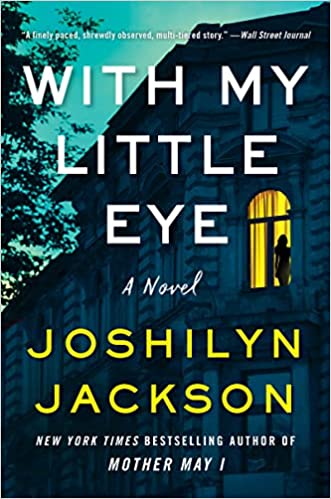
With My Little Eye by Joshilyn Jackson

book cover

The difference between stalking and courtship is so thin, I thought then. It all depends on if the person likes you back.

…there was nothing I could do to shake my stalker’s avid interest. It wasn’t even about me, although Marker Man would say it was. I was a shape to him, the outline of an object, filled in by him, interpreted by him. Not a person. I couldn’t stop him from coming after me, my friends, my family, because he stayed hidden, watching me, inventing me.

Meribel Mills has a problem. Well, a few, really, but there is a GINORMOUS one in particular, even without the age thing. Coming up on the big four-oh, getting work is increasingly challenging. Acting is not kind to anyone, but gets worse, especially for women, as they age. Meribel had been making a living in the biz, her big break playing a regular in a TV series some years back. She is the most fortunate kind of actor, a working actor. People still recognize her on the street “Hey, weren’t you on…?” but she is not hounded by paparazzi like real stars.

Nevertheless, someone in particular did notice her, and is, in fact, obsessed with her. (No doubt he considers himself to be her Number One Fan) He sends her letters in a distinctive hand, candy scented, and brighty colored. While professing undying love, the images he includes tend toward the homicidal. LAPD was not much help. Happy to step in once her body had been found, but short of that, sorry. No crime? No time. It became so bad that she accepted a role in her home town, Atlanta, a place she had sworn never to return to, leaving LA, friends, contacts, and a promising relationship. Maybe her stalker would lose the scent. As if. They call him Marker Man.

description
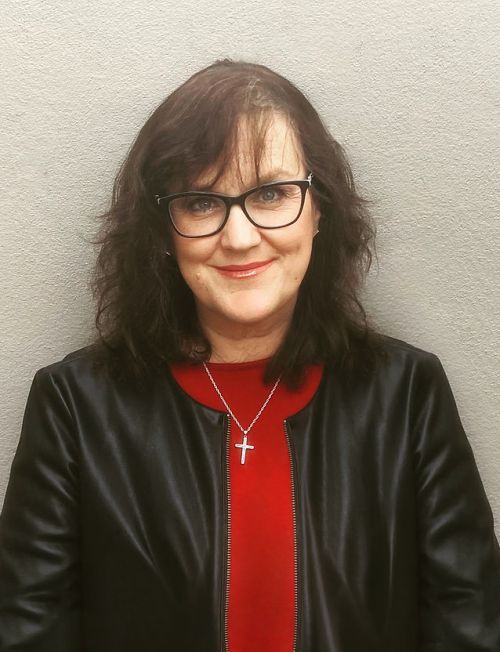
Joshilyn Jackson – image from her site – shot by Scott Winn

We follow Meribel as she tries to cope with the threat from this stalker. She is also trying to negotiate her relationships with the men in her life, her ex, the bf she left in LA, and a new acquaintance in her building. The pressure ratchets up as the killer becomes bolder and more terrifying. Could he be one of her real or potential love interests?

Meribel did not move east alone. Her 12yo adopted daughter, Honor, moved with her. Mother-daughter relationships are always a central element in Jackson’s novels. This one, though, offers a bit of a twist. Honor is on the autism spectrum. It is quite interesting following her trains of thought, and seeing how she copes with the world. There is a reason this piece of the novel works so well.

My daughter came to me in high school and was like, “Mom I think I’m on the autism spectrum…I’ve been reading about girls on the autism spectrum.” I’m like, “Honey, tell me why, what you think, because…that’s insane.” So she starts saying all these things and to every one of them she’s like, “well, girls on the autism spectrum do” this and this and this and this, and I would say, “Honey, that is normal. I was just like that. Every girl does that. OK?” No, they don’t! But the things she was describing were very very classic female autism, and seemed normal to me, because I was autistic…It’s cool that I was able to write Honor from a perspective of knowing what was really going on with her. – from Friends and Fiction interview

The love between Meribel and Honor comes through dazzlingly. We really get to see what it might be like to parent at least one sort of neuro-divergent child.

Additional content covers several areas. Hollywood permeates as a background. We get a look at Meribel’s early days there trying to get work, and at the predation of those with power. She remarks about parties to which she is invited, girls and boys like me are there as party favors. We get a look at how the value assigned to age and beauty impacts an actor’s career options. Not just actors, either. Meribel is not the only woman here struggling to look as young and attractive as possible. There is at least some irony in the fact that Meribel, whose career success requires that people watch her, is afflicted by someone who became smitten via his TV screen, but who now watches in a very different way. He even enters her home. How can you hold off the obsessed when modern media and technology makes it so easy to find out about you, and worse, to locate you? There is further irony in the fact that, now in Atlanta, Meribel does some stalking of her own. And not just on-line. She, however, holds no psychotic views, and sends no terrifying letters.

…this book is about gaze, like who is watching you and how does that change the power dynamic. – from the Friends and Fiction interview

Or, I suppose, spying, if one extends the title. Privacy is tough to come by. Jackson also offers a look at fans and detractors, how they interact with an actor when they recognize one in real life. The book closes with a nod to events that are about to become a big deal back in LaLa Land.

Who can you trust? Several candidates are offered for the baddie. The guy she left on the West Coast has managed a trip to Atlanta. Is he just looking for love, or something darker? A neighbor in Meribel’s new apartment complex has an on-again-off-again girlfriend, but seems interested. He has some nice qualities, but some issues as well. Meribel is still attached to her ex, James, in her head, if not in reality, even though he is now married with kids. Was he the guy watching her from across the street in the rain recently?

This is my sixth Joshilyn Jackson novel. The first was Someone Else’s Love Story, her seventh, so I missed a fair bit. But I believe they were of a cloth in many ways. Her site identifies nine novels as Southern Fiction. I was smitten with SELS and with the two that followed, The Opposite of Everyone and The Almost Sisters. Jackson offered engaging characters, a strong sense of place, and considerations of religion, race, and culture that were smart and moving. With My Little Eye is the third novel she has written of a different sort, following Never Have I Ever in 2019 and Mother May I in 2021. All three are pretty good thrillers, and all have payload beyond the core story. But none of them, however entertaining, provide the deeper resonance and satisfaction of the three written before them. The change came about organically.

I think that what really happened was I’d been trying to say something about my family history and the South, this land that I love, and I feel ambivalent about and I wrote a book called The Almost Sisters. And I’m not saying that I said it perfectly. I don’t think you can ever…the thing I was trying to say, I’ll never be able to say it better than in The Almost Sisters. I felt like a weight had been lifted. So I just started writing my next novel…I got a third of the way through the book and we were in negotiations and I was like this is a thriller. I’m writing a thriller by accident, and I called my agent. I was like “we can’t sign that contract. I’m writing a thriller. And she’s like “You’re writing a what?” – from Friends and Fiction interview

Don’t get me wrong, I like her thrillers, including this one, just fine. I appreciate the content that arrives along with the more page-turning tales, and respect her feeling that she has said all she has to say about the South, for now, anyway. But I enjoyed her earlier work more. I may be in a minority on this, as sales of her thrillers, I am told, have been better than for her Southern books. It’s like ice cream, I expect. It is all wonderful, but everyone has favorite flavors.

In any case, Jackson will engage you with a special mother and daughter, make you smile at their connection, keep you turning pages as you try to figure out, along with Meribel, who Marker Man might be, and worry who may or may not be left alive by the end. Your eyes may or may not be little, but you would do well to put them to use reading Joshilyn Jackson’s latest spark to increased blood pressure and late-night-reading-induced sleep loss.

Q – How did you get into the head of a stalker and how did that affect you?

AHe made me need to take a bath. I didn’t want to write him. I didn’t plan to write him in there. I started writing the book. I knew it would be mostly Meribel’s story. Meribel narrates probably 80 percent of the book, but there are a few other voices that come in, and I did not plan to let that man talk, and then I was like, ok. He has to be more present than this. Like I thought people aren’t gonna understand how, why would she leave her town. They would have to understand. Because I knew how bad he was, but it wasn’t appearing on the page. So, then I wrote his letters. I was like maybe I’ll just show his letters, but even that was not enough. People aren’t gonna understand why she makes these extreme choices until they understand how much danger she’s actually in and how bad this is. But yeah, it was gross and icky and he’s not a good person. – from Friends and Fiction interview

Review posted – 06/16/23

Publication date – 04/25/23

I received an ARE of book name from publisher in return for a fair review. Thanks, folks, and thanks to NetGalley for facilitating.

This review has been cross-posted on GoodReads

=======================================EXTRA STUFF

Links to the author’s personal, FB, Instagram, and Twitter pages

My reviews of other books by Joshilyn Jackson
—–2021 – Mother May I
—–2019 – Never Have I Ever
—–2017 – The Almost Sisters
—–2016 – The Opposite of Everyone
—–2013 – Someone Else’s Love Story

Interviews
—–Friends and Fiction – Joshilyn Jackson | Friends & Fiction #166 April 26, 2023 by Patti Callahan Henry, Mary Kay Andrews, Kristy Woodson Harvey and Kristin Harmel – – from 9:39
—–Military Press – Interview with Joshilyn Jackson by Elise Cooper
—–Decatur Church – 2023-04-25 Joshilyn Jackson “With My Little Eye” Book Launch – with Allison Law – video – 52:20 – start from 10:00 or so

Songs/Music
—–Billy Ray Cyrus – Achy Breaky Heart – Chap 20 – in the wave pool
—–Los Del Rio – Macarena – Chap 20 – in the wave pool
—–The Police – Every Breath You Take

Item of Interest
—–Wrote a Book – Book Club Questions for With My Little Eye by Joshilyn Jackson by Luka

2 Comments

Filed under Fiction, Mystery, Suspense, Thriller, Thriller

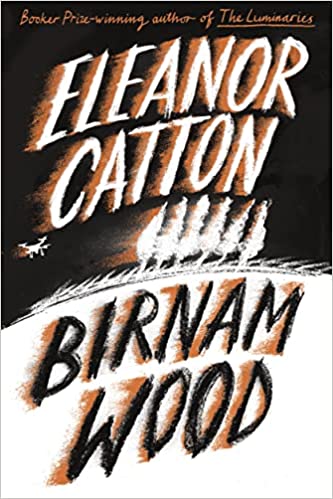
Birnam Wood by Eleanor Catton

book cover

…all the great tragedies are stories ultimately of betrayal. They’re stories where people betrayed the people closest to them but they’re also stories where people betray themselves. They kind of betrayed the better person that they could have become. – B&N interview

Third Apparition –
Macbeth shall never vanquish’d be until
Great Birnam wood to high Dunsiname hill
Shall come against him.


Macbeth –
That will never be.
Who can impress the forest, bid the tree
Unfix his earth-bound root?
The Scottish
Play

Wanna bet?

Birnam Wood is a serious, literary novel, a tragedy, cleverly disguised as an eco-thriller. Mira Bunting, 29, a horticulturist, heads an activist collective called Birnam Wood. They grow food in found plots of land, sometimes with permission, sometimes not. What they grow they consume themselves and give away to any in need. She discovered in childhood an interest in horticulture. It drowns out the relentless patter of self-critique that drives her.

description
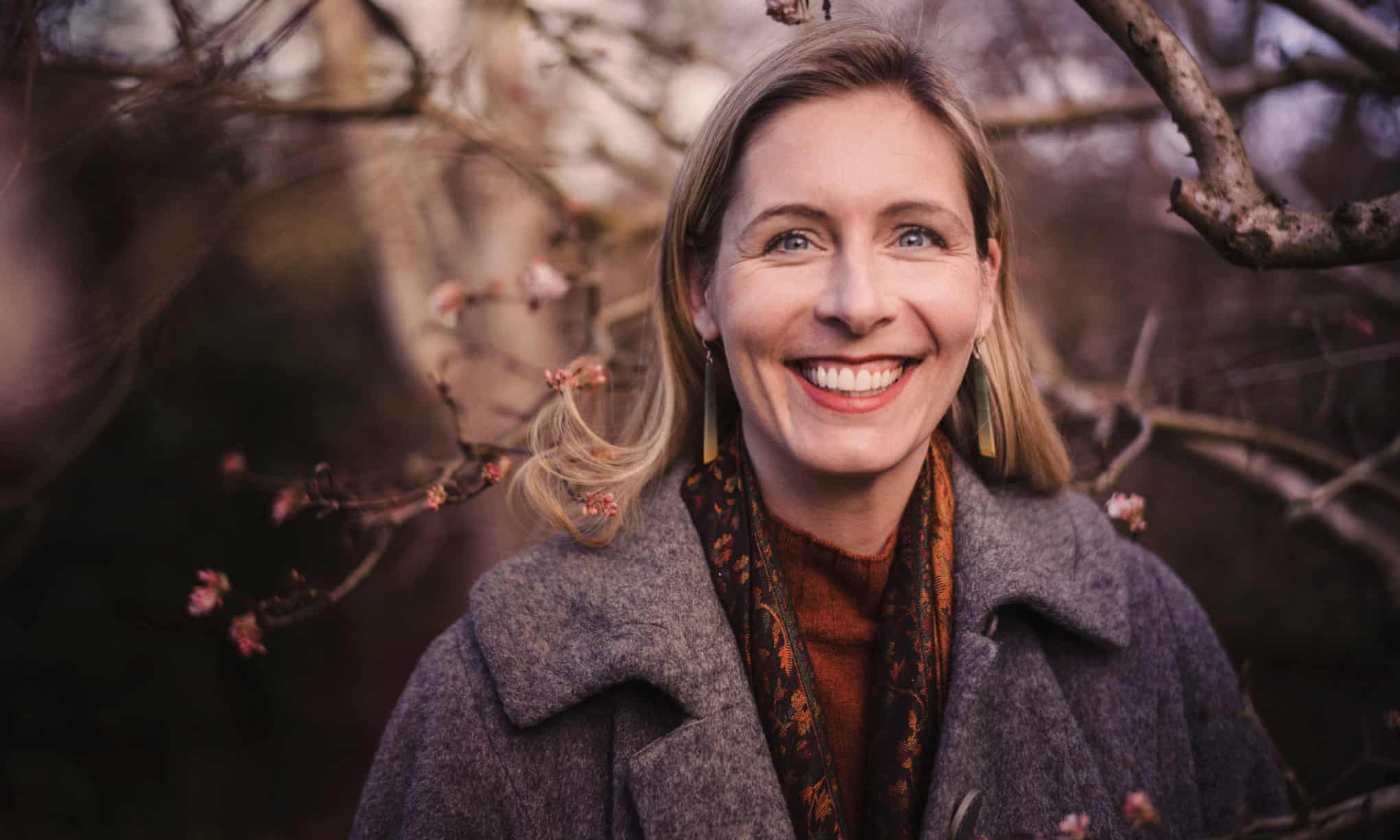
Eleanor Catton – image from The Guardian

Shelley Noakes is number two, the sort of efficient workhorse that most organizations need in order to survive. Though she is Mira’s roomie and bff, Shelley has grown tired of being taken for granted, always relegated to second fiddle, and is determined to leave. She struggles, however, with the knowledge that if she leaves, Birnam Wood will not survive Mira’s laughable incapacity for meat and potatoes organizational management.

Tony Gallo has been away for several years, backpacking, teaching English in Mexico, trying to find himself. He wants to become a freelance journalist, despite a thin volume of actual experience. He is idealistic and insufferable, his ideological lines are not only clear, but electrified. He is carrying a torch for Mira and has returned home to see if there are any sparks left. Eager for a journalistic break, he stumbles across a biggie.

Robert Lemoine is an American billionaire, disgustingly rich from his drone business. He is looking for a bug-out retreat in case of global meltdown, and had found just the place. Is Lemoine a well-meaning rich guy, or a Bond villain?

Owen Darvish, recently knighted, is the owner of that place, a considerable swath, cheek by jowl with a national park. Unfortunately, there was a major landslide there recently, which has cut off the town of Thorndike. Will the sale actually go through now?

The landslide has caught Mira’s attention. What if Birnam Wood could set up shop in a place that was effectively cut off from most ongoing enterprise? Might be a great chance to grow her non-profit into a much larger player, and maybe do a fair bit of good? She decides to make the considerable drive and check it out. While there, she encounters Lemoine. This is where the story really gets going.

The novel flows in two parallel streams, often merging, then separating, then merging again. The first is the eco-thriller. What is Lemoine on about? He can certainly come across as charming, and sincere, but is he really? Is the money he offers Mira for Birnam Wood’s work being given sincerely, or is he up to something? Does the devil speak true? That he has a studly appeal adds to the confusion. The other is a deep dive into personality and motivation, with rich literary technique and a host of thematic concerns.

Privacy, or lack thereof, is a frequent focus in the book. Lemoine, for example, is a developer of drone technology, and is a one-percenter as well in terms of knowledge of and facility with surveillance. (…he took his phone out of his pocket, tapped the screen, then turned it around to show her. Under the list of detectable devices nearby was listed ‘mira’s iPhone’.) It permeates down to the ninety-nine-percenters as well. This, for instance, is our introduction to Shelley:

…the yellow circle labelled ‘Mira’ pulled out into the street and began traversing slowly north. Shelley Noakes reduced the scale of the map until her own circle, a gently pulsing blue, appeared at the edge of the screen, and watched the yellow disc advance imperceptibly upon the blue for almost thirty seconds before turning off the phone and throwing it, suddenly and childishly, into the pile of laundry at the end of her bed.

Mira has a tracker app on Shelley’s phone as well. Mrs Darvish keeps up on where her husband is by tracking his phone. Tony’s research is of the investigative reporter sort, on line and in-the-field which, of course, entails some significant snooping. And, of course, he is snooped on while he investigates.

Catton uses interior dialogue to let us in on the main characters’ struggles with who they are and what they want. Well, not so much Lemoine, who struggles less with a values dialectic than with figuring out how to get what he wants from the world. Tony sees himself as a progressive, but wrestles with his feminist credentials, and sincerely wonders if he is inauthentic in his desire to make a meaningful career for himself, in presenting himself as someone who has to struggle to get by, who criticizes the very system that makes his life possible. Mira struggles to hide (…a vanity, an appetite, a capacity for manipulation that she would rather other people did not see; she knew, and was ashamed to know). Shelly has to reconcile her seemingly permanent peace-maker role in life with her need to be her own person.

Shelley wanted out. Out of the group; out of the suffocating moral censure, the pretended fellow feeling, the constant obligatory thrift; out of financial peril; out of the flat; out of her relationship with Mira, which was not romantic in any physical sense, but which had somehow come to feel both exclusive and proprietary; and above all, out of her role as the sensible, dependable, predictable sidekick, never quite as rebellious as Mira, never quite as free-thinking, never – even when they acted together – quite as brave.

This being a tale not told by an idiot, inspired by a tragedy, there will be familiar tragic elements on display. Tragic flaws for everyone. Come one, come all. But can the mere hoi-polloi really be tragic characters? Isn’t that reserved for the high and mighty? Owen Darvish certainly counts for that, as does Lemoine. But Mira? Shelley? Tony? Or is grandiosity alone sufficient to elevate one to a height sufficient to mark a character as potentially tragic? Catton does make us wonder as we read just who are the tragic characters, and who the schlubs who are guilty of, maybe, a bit of overreach, or garden variety foolishness.

Of course, there is more to them than merely wanting beyond their capacities. There is another element from tragedy to consider. Note the quote that opens this review. Betrayal figures large. There is enough deception in the air here that one might be well advised to don a bee-keeper outfit to fend off the tangled webs that permeate the landscape. Secrets will be kept, some minor, some world-class. Our intro to Mira, for example, shows her using a false identity to research the landslide area. More importantly, is she selling out the collective if she comes to a deal with Lemoine? Shelley tries her best to seduce Tony as a passive-aggressive way of getting Mira to separate from her. Others have their own secrets and betrayals nicely tucked away.

Another tragedic element is that outcomes are the result of actions, not fate or chance. If you look back down the path from end to beginning you will see all the characters’ yesterdays lighting the way to an inescapable end. Although it is not the only influence on the book, Macbeth is clearly the primary one.

[Catton] drew up another intricate masterplan in which each of the main characters could be seen as Macbeth, with a corresponding Lady Macbeth, witches and so on. It sounds tricksier than it is: as the narrative perspective shifts, everybody could be the villain. She wanted to stop readers playing “the polarised blame game we are all used to in contemporary politics,” she explains. “You wouldn’t be able to say: ‘These are my people so they are obviously the good guys. These are the people that I despise so they are obviously the bad guys.’” – from The Guardian interview

You will have to find out for yourself how much of this structure made it into the final draft.

Other significant sources of inspiration were 20th century crime fiction, Jane Austen’s Emma, (the structure and taut language) and even Mary Shelley’s Frankenstein. The character Shelley was named for the author, leaving us to wonder whether this Shelley is creature or creator.

While this is a novel in which actions matter, and have consequences, it is also one in which the omniscient narrator will tell you everything you need to know about each of the characters. This ability to look into (monitor remotely? surveil?) everyone’s deepest inner thoughts and feelings resonates with the surveillance elements in the story. One of the precipitating ideas for the book, the Big-Brother-is-watching element certainly, sprung from a 2015 protest in which New Zealand police were taking photos of protesters as they walked past.

Catton is also interested in inter-generational dealings.

It’s something I have thought about a lot…how my generational placement or position has conditioned me. The book is designed generationally. There are three generations represented in terms of the points of view. And I wanted to really explore the generational differences in terms of how they deal with certain contemporary problems that we’re all kind of facing globally. – from The Toronto Public Library interview

But it is no boomer-bashing party.

“Millennials are quite willing to cosy up to the tech gen Xers,” she says. “We are all personally enriching billionaires like Elon Musk by freely giving away our data…These minerals are in the phones that are around us all the time. I want my iPhone. I want to be able to have the freedoms that it brings. We are all complicit.” – from The Guardian interview

In addition to its literary and thriller aspects, Birnam Wood is a satire, a caricature of diverse sorts. Most glaring is the Birnam Wood members, whose motivations and desires are often less idealistic than what they show to the world. Darvish comes in for an uncomplimentary look, too, as does Lemoine. It is a tale, also, about expectations.

Macbeth is a play that’s all about prophecy. It’s animated by prophecy. So I …re-read it with everything that was happening in terms of world events resounding in my head and suddenly saw it in a really different way, as a play that contains very interesting and loud warnings about what happens when you regard the future with too much certainty if you’re too convinced about what lies just down the road. Because of course Macbeth makes the ending of Macbeth happen. None of that was written on the wall before before he received those prophecies and I and so I kind of wanted to achieve a similar effect in a novel by writing a book about incremental political actions and moral actions that end up kind of having these enormous effects that were avoidable. – from the Barnes & Noble interview

In short (too late, I know), Birnam Wood is a multi-layered triumph, building on classic structures and themes to tell a very contemporary story, offering consideration of how people make very human choices, as they contain battles between morality and desire. The tale does not at all creep in a petty pace, but rolls along at a good clip, shifting into turbo as it nears the end, generating an abundance of sound and fury which certainly signifies something.

Like all self-mythologising rebels, Mira preferred enemies to rivals, and often turned her rivals into enemies, the better to disdain them as secret agents of the status quo.

Review posted – 6/9/23

Publication date – 3/7/23

I received an ARE of Birnam Wood from FSG in return for a fair review. Thanks, folks, and thanks to NetGalley for facilitating, but ever since writing the review, I acquired, and can’t seem to wash off, these bloody spots.

This review has been cross-posted on GoodReads

=======================================EXTRA STUFF

Links to Catton’s Good Reads and Wikipedia pages

Profile – from Wiki

Eleanor Catton MNZM (born 1985) is a New Zealand novelist and screenwriter. Born in Canada, Catton moved to New Zealand as a child and grew up in Christchurch. She completed a master’s degree in creative writing at the International Institute of Modern Letters. Her award-winning debut novel, The Rehearsal, written as her Master’s thesis, was published in 2008, and has been adapted into a 2016 film of the same name. Her second novel, The Luminaries, won the 2013 Booker Prize, making Catton the youngest author ever to win the prize (at age 28) and only the second New Zealander. It was subsequently adapted into a television miniseries, with Catton as screenwriter. In 2023, she was named on the Granta Best of Young British Novelists list.

For those looking ahead

…her next work, “a queasy immersion thriller” that will be called Doubtful Sound, after the remote fjord in the south-west of New Zealand where it is set. She has had the title for a long time – “I just think it is so beautiful” – but it was only in the final months of completing Birnam Wood that the story came to her. – from The Guardian interview

Interviews
—–Poured Over: A Barnes & Noble Podcast – Eleanor Catton on Birnam Wood with Miwa Messer
—–Toronto Public Library – Eleanor Catton – Birnam Wood – Mar 6, 2023 – video – 44:50
—–The Guardian – Eleanor Catton: ‘I felt so much doubt after winning the Booker’ by Lisa Allardice
—–NY Times – Eleanor Catton on ‘Birnam Wood’ with Gilbert Cruz – audio – 35:11
—–Stuff – Eleanor Catton on guilty pleasures, being a slow writer, and whether NZ is still home

Songs/Music
—–Rockwell – Somebody’s Watching Me
—–The Police – Every Breath You Take

Item of Interest from the author
—–Waterstones – Eleanor Catton on Birnam Wood and its influences – video – 6:29 – on Emma as inspiration. There is a lot in here.

Item of Interest
—–The New Yorker – March 13, 2023 – Eleanor Catton Wants Plot to Matter Again by B.D. McCloy

Leave a comment

Filed under Cli-Fi, Fiction, Literary Fiction, Mystery, Thriller

Who Gets Believed by Dina Nayeri

book cover

”Who ya gonna believe, me or your own eyes?” – Chico Marx in Duck Soup

The truth isn’t enough. Most people aren’t even listening for it.

Agent Mulder knew that the truth was out there. But what can one do about those who are incapable or unwilling to see it, or worse, those who have a vested interest in disbelief? And how much responsibility to persuade the unpersuadable must be carried by those whose truth is in question? Aliens do figure large in this book, but not in the Mulder/Scully mode.

description
Dina Nayeri – image from LitHub

Dina Nayeri has been writing about the truth since at least 2012, with a particular emphasis on immigrant issues, more specifically, on refugees, asylum seekers. Her previous book, The Waiting Place, released in 2022, documented life in Katsikas, a Greek refugee camp, mixing tales from the lives of some of the children there with her own experiences as a refugee from Iran. In The Ungrateful Refugee, 2019, she writes of adult refugees she has met, looking at what being a refugee is like for them. She has also written novels and short fiction, centered on the refugee experience. And that is her primary focus here as well.

The aim of that book [The Ungrateful Refugee] was to really look back on my own experience, and what people go through now to make some sense of the modern displacement experience. One of the sections of the book is about asylum storytelling, and I had so many stories of people getting disbelieved for the stupidest reasons, and the way that the asylum officers listen to the stories. It was very shocking. I wanted to write a lot more about that and, with this book, I wanted to expand that out to just how the vulnerable are listened to, versus people who are very privileged. – from the Ms Magazine interview

In Who Gets Believed, Nayeri takes on a broader perspective. She looks at the challenges people face in trying to get their truths believed not only in refugee situations but in many other walks of life.
There are two factual threads that bind the book together, weaving in and out over the course of three hundred or so pages. First is the tale of K, a Tamil torture victim whose evidence includes a back full of scars. Somehow the system tries to persuade itself that K did that to himself in order to gain entry to the UK. If this sounds Kafkaesque to you, it does to Nayeri, as well. She frequently cites that patron saint of bureaucratic horror as she takes us through the nightmare world of mindlessness, and barely disguised racism, sexism, and xenophobia that is the West’s immigration system. It makes a powerful metaphor for how the system treats those whose rights are supposedly guaranteed by international treaty, but who are more typically treated as rightless, and suspect supplicants.

For most migrants [asylum attorney Maleha Haq] explained, credibility isn’t the reason for rejection. In fact, the issue of credibility is cleverly avoided by using the claimant’s own lack of knowledge about the definition of a word. What is a refugee? Before he is believed, an asylum seeker must choose the right story out of many, the relevant part of a complicated life. It’s like being asked to cut a circular disk from a cylinder. You have many stacked circles, but if you cut at the wrong angle, you have an oval. You’ve failed to present the desired thing.

Another thread is her brother-in-law, someone with a lifetime of mental health issues. Making the credibility tale personal, she writes about not believing he was really incapable of providing for himself in the world, seeing him as a leech on his family, a con-artist working the system. This is a powerful approach, bringing in real-world issues, but with names and faces, and humanizing the core questions even more by weaving in how disbelief, even her own, has impacted her life.

One of the many strengths of the book is Nayeri’s commentary on communication. She tells how language is used as a tool of obfuscation and exclusion. Refugees must learn the nuances of the immigration system in order to gain entrance. They must learn to play the game, memorize the exact right words to use, be ready to offer the right presentation. The unpolished truth is typically fraught with openings that officials, whose default is rejection, (UK Home Office workers are given target numbers for rejecting asylum seekers.) can seize on to deny asylum. It is disheartening to learn that the prospects of a refugee gaining asylum correspond very closely with whether they have legal counsel or not, which bodes ill for most. Again Nayeri offers a personal element, reporting on her experiences with having to learn not just what, but how to present, in order to get what she wanted, whether acceptance to a college of her choice, or a job, post college.

Despite all the talk of leadership and change-making, what you actually learn at Harvard Business School is how to be believed—how to be the ones people want to believe, feel safe believing, given their heuristic shortcuts.

The cost to refugees is clearly higher but the parallels in how one must approach large systems with language resonates like Big Ben at the top of the hour.

…belonging is a performance with a script

Nayeri looks as well at a bit of the world of medicine. She notes that many caregivers disparage sufferers of Sickle Cell Disease, who must repeatedly seek help with pain issues, as “Sicklers,” refusing to take seriously the very real pain experienced by those afflicted. And she notes caregiver disparagement of different ways of grieving in different cultures.

She has a tale of her own about her doctors refusing to treat her the way she wanted, as a reflection of how many doctors do not take seriously the wishes and pain reports of many women patients. This one resonated personally. In late 2021, my own sister experienced this, as, for months, she had complained of pain, but was sent home from each medical visit (when she could even get one. Sometimes this entailed months of waiting.) with little or no relief, and no real examination, certainly no effective one, of underlying causation. After all, she was just an old lady, and old people have pain all the time. No big whoop. The pain finally became too much and she was rushed to the ER. Subsequent surgery revealed a return of a stomach cancer after a ten-year-remission, nicely metastasized. She was dead within weeks. The risk entailed in medical professionals ignoring claims of pain is very real.

She takes on The Reid Technique, a widely used interrogation regimen routinely abused by police, with a chargeable outcome being a much higher priority than truth-seeking. She looks at how the methodology is used to generate inconsistencies, which are then portrayed as evidence of dishonesty. The obverse of this is firefighters being granted exceptional credibility when testifying as expert witnesses, despite there sometimes being little scientific merit to what is claimed on the stand.

The Reid Technique begins with an assumption of guilt. It was originally intended to be used only when the interrogator is absolutely certain of guilt. Even then, it was intended not to extract a confession that might condemn the suspect on its own (the technique is, after all, so torturous that even its creators didn’t believe it would cause an innocent person to confess, they seemed aware of that risk), but to uncover new, unknown details—intimate ones about the why and the how—that could then be corroborated. It was that supporting physical evidence that would convict the guilty—a body, a weapon, some real proof.

It might be easy to intone a general rule of Trust No One, but refugees do not have that luxury. Unless an asylum-seeker can somehow get legal representation, they are forced to trust people who are in a position to help or harm their cases.

There is plenty more in here, dives on how we persuade ourselves to believe thing that are not true, how politics creates truths, even alters our bodies, on how we only see what we are looking for, how having stories told publicly makes them more real, how consultants befuddle their clients. You will learn a lot. You will also feel a lot. Nayeri’s stories are moving, upsetting, and hopefully, motivating. They will force you to think, and, hopefully, engage in some introspection. Her willingness to own her own biases shows that she is not looking for justice solely in the world outside, but within herself. Red Smith famously said that writing was easy, All you do is sit down at a typewriter, cut open a vein, and bleed. I imagine there was a lot of cleaning up necessary in Nayeri’s writing places while she worked on this book. Also, she is not trying to get you to like her. This is an honest portrayal of a complicated person, one who struggled trying to fit in with American society as a child, and who maneuvered the ivy halls of Harvard and Princeton, and a premier spot in the consultoverse, in her drive for success.

Who Gets Believed is a powerful look not just at the terrifying refugee experience, but at the wider problems of disbelief that are grounded in biased or unsupported notions. I Want To Believe that the issues raised in this book are being addressed, but while I expect that there are awareness programs being run by some healthcare provider institutions, I seriously doubt there is anything being done by police departments to cope with abuse of the Reid Technique. And I would bet that immigration services, swamped as they are with applicants, and chronically understaffed, are unlikely to have done much about basing asylum denials on firmer reasons than what appears the case today. The truth of what is happening in these parts of our world is definitely out there. Dina Nayeri has brought some of that truth to the rest of us. Belief is only needed if there is no proof. Nayeri offers evidence. These are truths you need to know.

this variability in judicial standards is one of the greatest flaws of the American asylum system. Why should the weight of any kind of evidence vary by judge? Should one’s fate depend on the compassion or politics of the judge assigned? Should it vary by administration?…asylum grant rates go up and down based on who the attorney general is. That’s not just at the judge level but at the screening stage. The number of people found to have credible fear and entitled to be seen by a judge depends on political pressure.

Review posted – 06/02/23

Publication date – 03/07/23

I received a copy of Who Gets Believed? from Catapult in return for a fair review.

This review is cross-posted on Goodreads. Stop by and say Hi!

=======================================EXTRA STUFF

Profile – from Wikipedia
Nayeri was born in Isfahan, Iran. Her mother was a doctor and her father a dentist. She spent the first 8 years of her life in Isfahan but fled Iran with her mother and brother Daniel in 1988 because her mother had converted to Christianity and the moral police of the Islamic Republic had threatened her with execution.[1]Nayeri, her mother and brother spent two years in Dubai and Rome as asylum seekers and eventually settled in Oklahoma, in the United States.[2] Her father remained in Iran, where he still lives. She has written several works of non-fiction, novels for adult and children, and numerous articles.

Links to the Nayeri’s personal, FB, Instagram, and Twitter pages

Interviews
—–NPR – Dina Nayeri wants you to question ‘Who Gets Believed’ | Book of the Day – with Juana summers – audio – 8:44
—–Ms Magazine – Telling the ‘Right’ Story: Dina Nayeri on Refugee Credibility – by Jera Brown
—–LitHub – Manufacturing Lies: DinaNayeri on How Our Cultural and Bureaucratic Norms Often Betray the Truth with Whitney Terrell and V.V. Ganeshananthan

Songs/Music
—–The Weeknd – High for This– mentioned in Chapter 5

Items of Interest from the author
—–PBS – Is the distinction between migrant and refugee meaningful? – Video – 3:02
—–Muck Rack – Articles by Dina Nayeri – links to pieces in diverse publications

Items of Interest
—–NY Times – Many Women Have an Intense Fear of Childbirth, Survey Suggests by Roni Caryn Rabin
—–AP – Why do so many Black women die in pregnancy? One reason: Doctors don’t take them seriously by Kat Stafford
—–Wisconsin Criminal Defense – Understanding the Reid Technique in Police Interrogations – The Law Offices of Christopher J. Cherella
—–Project Gutenberg – The Trial by Franz Kafka – full text for free

Leave a comment

Filed under American history, Bio/Autobio/Memoir, Feminism, History, Non-fiction, Psychology and the Brain, Public policy, Reviews