Yearly Archives: 2016

Pacific by Simon Winchester

book cover Simon Winchester takes pride in being a traveler. It was another traveler, the explorer Ferdinand Magellan, who, in 1520, gave the largest body of water on our planet the name by which we have known it ever since. After surviving a trip through the straits (now called the Straits of Magellan) at the southern tip of South America, his ships sailed into a very welcome calm sea. He named it pacific, for peaceful. And it was, no doubt, quite calm in comparison to the somewhat livelier waters of the Atlantic. It is big enough, at 59 million square miles, that you could cram all the landmass of earth into the Pacific basin and still have a couple of million square miles left over. Sucker is humongous.

description
The Biggest Kahuna – from vastoceans.com

Writing about the biggest piece of blue on the blue planet (No Kibbie, not where Smurfs come from) might prove a daunting challenge. Where to begin? Where to end? What to include? What to exclude? Decisions, decisions, decisions. To make his task manageable, Winchester opted to focus on the years since 1950 and look at some of the events that tell tales of lives at the edges or even in the middle of the ocean. I suppose this is like anyone’s top ten list for anything. There are always those who would grouse about the inclusion of this and such, while others would no doubt lobby for the addition of their personal favorites. Bottom line is, if you trust Winchester’s reportorial judgment, you will probably be ok with the choices he made. For those of us who have read his earlier work, this is an easy yes. I’m not saying that I necessarily agree with all his choices, but every element on which he fixes his gaze is interesting, and his well-honed tale-telling skills add that other part of a well-written work of non-fiction, making the journey he takes us on an engaging one. He is a gifted guide and while humor is not his main goal here, he does get in a chuckle or two. My favorite was of a bit of English understatement

Sir Eugene Goosens, the towering and talented figure of English music who, while conductor of the Sydney Symphony, had begun the process that led to the building of the Opera House, turned out to be a man of highly exotic sexual tastes. And that, to the Australia of the time, was most decidedly not on. While in Sydney, Goosens became romantically involved with a woman named Rosaleen Norton, who was a pagan, a keen practitioner of the occult. And a lady who had a liking for both flogging and unusual kinds of misbehavior with animals, mostly goats. ..

Can’t you just see that being broadcast on the BeeB by an expressionless news reader? Or delivered by John Gielgud with the same dead-panache he used in Murder on the Orient Express when asked about an injury. “Yes, there is an old contusion. The result of a slight fracas in the mess, sir, with regard to the quality of a pudding known as spotted dick.”
book cover

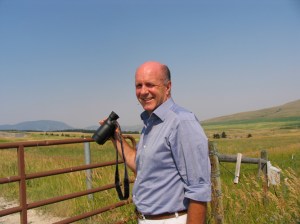
Simon Winchester – from his site

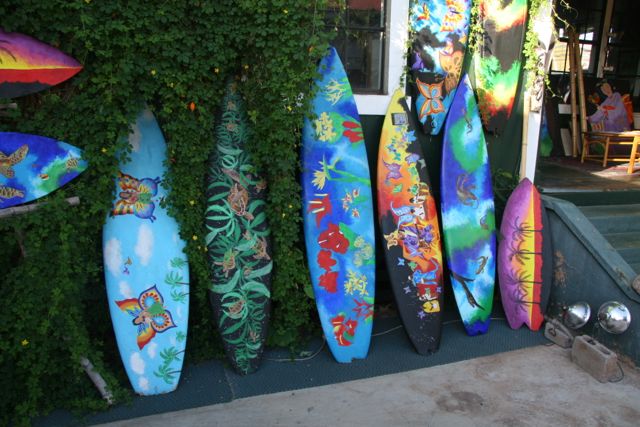
Winchester’s subject choices are diverse. He is something less than radiant in his feelings about the nuclear testing done by the USA on Bikini atoll, while looking at the science involved, the politics of testing, the treatment of the locals, and of the impact on American military personnel, and the environment. He changes channels to the beginnings of SONY and the consumer electronics revolution in Japan, hangs ten with a look at the globalization of surfing culture, draws on the origin of the line that divided North from South Korea, considering both history and political implications, reaps a tale of an unanticipated legal bounty sown by a well-known ship a long, long time ago, waves goodbye as Hong Kong is restored to Chinese control, warms up to a look at climate change and its impact on storm size and frequency, tries his luck Down Under with a look at an unappreciated, visionary reformer, while telling the tale of the Sydney Opera House, noting some of the darker broom-riders in OZ, and offering a warm g’day for an entertainer of note, dives into a consideration the mind-boggling global mid-ocean ridge system, mourns the loss of species through the impact of man, and shows how a volcanic eruption contributed to a significant shift in the balance of military power in the South China Sea. Whew!

description
Lahaina Boards – Maui

His approach here is quite different from the one he used in writing his 2010 book, Atlantic, in which he tracked the stages in the development of the ocean itself. This one seemed more of a concept approach, like a very large issue of a smart general audience magazine like, say, Smithsonian, if it decided to do an issue on an ocean. He covers diverse subjects over a considerable span of time and subject. Winchester is a serious writer and looks into his chosen subjects with a steady gaze. There are moments, however, when some of his biases creep in. For example, in writing about the return of Chinese control to Hong Kong, Winchester writes

And Hong Kong, the British colony…was wrested from London’s hands [emphasis mine] in 1997 and is now an increasingly Chinese part of China

As if the peaceful end of a lease constituted armed robbery.
description
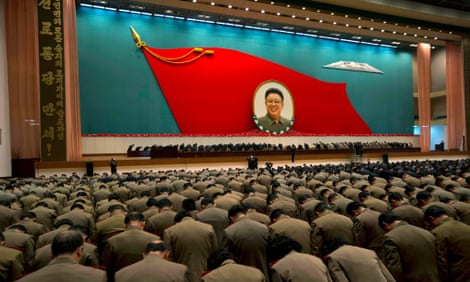
The number one Pariah Nation – from The Guardian

In a passage about Korea he writes

Many military strategists have speculated that the world might have been a far safer place if postwar Korea had been divided four ways: among the United States, the Soviet Union, the Republic of China, and the United Kingdom, as was first proposed. Or if the Soviets had been given free rein to invade all of Korea, and be done with it. In this latter instance, there would have been no Korean War, for certain—merely a Leninist satrapy in the Far East that, most probably, would have withered and died, as did other Soviet satellite states.

I thought this was rather cavalier of Winchester. Who is to say that a fully Sovietized Korea might not have given the USSR strategic advantages that might have impacted the development of Japan or other western leaning nations? And what of the impact on the residents?

But there are far more revelations of a fascinating sort. For example, this one from 2013

Admiral Samuel Locklear III in charge of all US forces in the Pacific…declared his belief that it was actually changes to the climate—changes that were powerfully suggested by typhoon clusterings that he and his weather analysts had observed—that posed the greatest of all security threats in the region.
“Significant upheaval related to the warming planet is probably the thing most likely to happen…and that will cripple the security environment.”

I guess the Admiral is just another tree-hugger. One of the things that makes a good non-fiction read is the number of times one feels impelled to follow up the material the author presents with some extra digging of one’s own. You will probably be able to construct a prairie-dog town from all the digging you will want to do while reading Pacific. I have provided a few starter holes in the EXTRA STUFF section. For me, there was much here that was news, including how the line between North and South Korea came to be, some of the specifics of the US nuke tests, and the treatment of the test area locals, Jack London’s relationship to surfing, an almost comedic story of a DMZ tree, Gough Whitlam’s exciting PM term and the current growth of xenophobia in Australia, and China’s program of expanding their territorial claims and breadth of military installations in their coastal waters. Whether these items in particular float your boat or wash it ashore, there are plenty more bits and pieces in Winchester’s Pacific that, when taken as a whole, join to form a very large and satisfying read.

Review posted – 10/23/15

Publication date – 10/27/15

=======================================EXTRA STUFF

Links to the author’s personal, Twitter and FB pages

A nice overview of Winchester’s professional life can be found here

Pacific was long-listed for the Andrew Carnegie Medal for Excellence in Nonfiction

Lots of nifty information about the Pacific on the official site of the National Oceanic and Atmospheric Administration (NOAA)

This is a colorized and somewhat kitschy vid of the Baker nuclear test on Bikini atoll

Here, a US propaganda film on the Crossroads nuke testing program

Sir Leslie Colin Paterson AO is a creation of comedian Barry Humphries, better known for giving the world Dame Edna Everage. Sir Leslie is a send-up of a particular Oz type. There are many vids out there of Sir Leslie. Here is sample.

Still on Oz, here is the ABC 60 Minutes Tracie Curro interview with Aussie political rising star and xenophobe Pauline Hanson

A Woods Hole lecturer on hydrothermal vents. Smoking permitted.

A NY Times Magazine piece by Jon Mooallen – Larry Ellison Bought an Island in Hawaii. Now What?

A November 2, 2015 New Yor Times article by John Schwartz, on increasing storm frequency and strength in the Pacific, The Pacific Ocean Becomes a Caldron

What China Has Been Building in the South China Sea – by Derek Watkins – NY Times – October 17, 2015 – added here December 22, 2015 – This is a subject Winchester looks at in his book with some detail and alarm

1 Comment

Filed under Reviews

Departure by A.G. Riddle

book cover

It seems I’m involved in a conspiracy that spans space and time and a conflict whose outcome will determine humanity’s fate in two separate universes.

Oh, is that all? Flight 305 from New York to London runs into a little space-time turbulence and finds itself, or a piece of itself, anyway, in an English lake. Help should be along shortly, right…um, right? The passenger list included five people of interest. Venture capitalist and take charge sort Nick Stone has done nicely in tech and is en route to meet with some folks who are looking for him to invest in their projects. Harper Lane is a ghost-writer of biographies. She is facing a knotty question about her career direction, to take on the bio of a very high profile businessman and philanthropist or attend to her heart’s true writing passion, an original adventure series. Can’t do both. Theirs are the alternating viewpoints we have throughout Departure. The other three are Grayson Shaw, son of a billionaire, who seems determined to make everyone loath him with his persistently boorish behavior. How he got that way, as the King of Siam might say, is a puzzlement. Sabrina Schroder is a German genetics researcher, a doctor with a less than warm and fuzzy crypt-side manner, and Yul Tan (or you won’t) is that mysterious Asian guy who not only kept banging away at his laptop through the abbreviated flight, but who is at it still. What’s up with that? There are plenty of LOST-type goings-on in the opening, but we soon get an inkling of the predicament that underlies everything and that is when the story gets going for real. And who are those guys in the latest Haz-mat couture being dropped off by airships and why are they pointing weapons at us?

book cover

A.G. Riddle – from PBS

A.G. Riddle is one of those rarest of the rare, a very successful self-publisher. His trilogy, The Origin Mystery has, according to his site, sold over a million copies and has been optioned for film. Riddle used to be involved with starting internet companies. Not sure what that means, but he was able to quit his day job and devote himself full-time to writing, so I guess it worked out well for him. It is not hard to see Nick as a magnified version of the author. Departure was, likewise, a self-pub. It came out on January 1, 2014 and did well enough that a major publisher made an offer.

Departure is a turbo-charged maze of sci-fi action adventure tale that will keep you flipping the pages, wanting to find out what happens next. There is plenty of high tech, some of which seemed a bit gratuitous. And there is even some substance, with a focus is on the importance of decisions.

I wonder what the world would be like if we could all glimpse our future before every major decision. Maybe that’s what stories are for: so we can learn from people living similar lives, with similar troubles.

Yeah, sounds a bit teenaged to me too, and this is not the only example of such fourth-wall breakage about writing. But it is fleeting. The book is actually very much about decisions, turning points in which the future is determined. Harper may be looking at a tough career choice, but it has implications that might affect the future of the human race. A butterfly effect of Mothra-like dimensions, but without the adorable twins.

There are a few mysteries to be sorted out, for the first half of the book anyway. What was Yul Tan so into on his computer? And if it’s a game where can I get it? Where can Grayson find more alcohol? When will Nick and Harper get a room? Can the future of humanity be saved? And can you please explain quantum entanglement?

Yes, there is eye-rolling over-simplification, and character names that sometimes sound like they came from pulp novels of a bygone age. There are some absurdly large, Akashi Kaikyō Bridge level, (or for us Yanks, Verrazano-Narrows Bridge level) suspensions of disbelief that one must endure in reading this book. I will not specify them here, but am putting them in a spoiler-protected portion of the EXTRA STUFF section. Your eyes will roll, and if they don’t, they really, really should. Skip on by those and try not to let them interfere with the story. These items have nothing to do with time travel, but more with land use and international politics. But there are always complexities and minds to be bent when it comes to explaining movement and communication across timelines. Riddle offers a particularly nifty take on the communication piece. Kudos for that.

It is no stumper figuring out what AG Riddle is up to, keeping you strapped into your seats, breathlessly turning pages. Departure may take leave of its rational senses a fair bit, (not unlike Dan Brown offerings) but, nonetheless, it is a fast-paced, engaging sci-fi thriller that will impair your ability to make your travel connections. And if it prompts you to think a tiny bit more about the decisions you make in your life all the better. Having secured booking with a major publisher, and a film option to boot, Departure is about to take off and I expect you will enjoy the ride.

Published – January 1, 2014 (self) – October 20, 2015 (Harper)
Review Posted – September 11, 2015

=============================EXTRA STUFF

CHECK OUT THIS ARTICLE!!! – Direct relevance as science plays catch-up with science fiction – from NY Times – 10/21/15

Links to the author’s personal, Twitter, Tumblr and FB pages

Pods. Although the sort of system Riddle posits is akin to the pneumatic tube notion being supported by Elon Musk , among others, the look Riddle described for the vehicles seemed to me more like that from this article from AllPics4U.com

description

I did wonder up above about Quantum Entanglement – Here are a couple of pieces that try to explain this very real form of weirdness
—–Wiki
—–ScienceDaily.com
—–Livescience.comt

Spoilerish eye-rollers. I am not entirely certain that the items noted here qualify as actual spoilers, but why take the chance? On Goodreads, I can hide this text, but on WordPress, I cannot, so am putting it red so you know you may want to skip it until you read the book.

The Podway first united Europe then Asia and finally the rest of the world, enabling safe, convenient, cost-effective mass transit.

Piece of cake, right? The transportation system that is projected to take over mass transit may or may not be a wonderful thing, but little attention is given to how insanely challenging it is to get rights of way, then to build the infrastructure, and what of the existing mass transit? Did it cease to exist? If it didn’t, then what happened to the real estate it occupied? And for there to be an underground tube connection to some building in the burbs or boonies? Really? And there is a bigger eye-roller. The core organization here has put forth a plan to erect a dam across the Gibraltar straits. That is probably do-able. What is not do-able is for every country with a border on the Mediterranean to go along with a project that will wipe out a vast swath of coastal sea for those nations, creating a new nation in the middle of the former body of water. Really? Not only will Mediterranean nations ok the loss of a fishing industry, they will be ok with the creation of another country on their sort-of borders? And what about nations with military ships? Are their navies to be use to decorate the dam? Are you insane? We are in wishing-will-make-it-so land. And not even a wizard, even if he’s a whiz of a wiz, could persuade me that this is doable on a planet still occupied by a large number of humans, hell, by any number of humans. It is possible to look past these bits of silliness, but it is not easy.

Leave a comment

Filed under Action-Adventure, Fantasy, Fiction, Reviews, Sci-fi, Science Fiction

The Devil’s Chessboard by David Talbot

book cover

We often forget how fragile a creation democracy is—a delicate eggshell in the rough-and-tumble of history. Even in the cradle of democracy, ancient Athens, rule by the people could barely survive for a couple of centuries. And throughout its brief history, Athenian democracy was besieged from within by the forces of oligarchy and tyranny. There were secret clubs of aristocrats who hired squads of assassins to kill popular leaders. Terror reigned during these convulsions and civil society was too intimidated to bring the assassins to justice. Democracy, Thucydides tells us, was “cowed in mind.”

Our country’s cheerleaders are wedded to the notion of American exceptionalism. But when it comes to the machinations of power, we are all too similar to other societies and ones that have come before us. There is an implacable brutality to power that is familiar throughout the world and throughout history. And no matter where power rules, there is the same determination by those in high places to keep their activities hidden.

Who killed JFK?

In The Map That Changed the World, Simon Winchester wrote about William Smith, an 18th century canal digger who discovered that beneath the surface of the earth there were hidden layers of fossils, earth and stone that rose and fell connecting one to another and forming an understructure that told a tale of the earth’s history. He spent more than two decades gathering the information to prove his theory and eventually created the map of the book’s title. David Talbot entered into a considerable effort of subterranean digging himself, and has drawn a map of unseen layers that cross the planet and affect everything, a map that shows some of the hidden structures that lie beneath the world we think we know, the history we think we have experienced. The fossils in this case are pieces of evidence showing a history of secrets. When you look at the mass of dark deeds perpetrated by the United States in the latter half of the 20th century, there is one man, more than any other, who appears, Zelig-like, over and over again, Allan Dulles, the evidence of his deeds buried in the fossil accretions of our public and foreign policy past. His older brother, John Foster Dulles, would become a Secretary of State and wield considerable influence on his own. The pair formed a two-headed monster of foreign intrigue while in office at the same time. But the focus here is primarily on Allen Dulles

book cover

David Talbot – from USC

The Devil’s Chessboard reads like a riveting spy novel, peeling back layer after layer as it races to its climax. Dulles was a partner in an international law firm. Foster was chairman. Allen Dulles spent considerable swaths of time in government service, as a diplomat and spy. As such he made contacts all across Europe that would come in handy later.

Foster Dulles became so deeply enmeshed in the lucrative revitalization of Germany that he found it difficult to separate his firm’s interests from that of the rising economic and military power—even after Hitler consolidated control of the country in the 1930s. Foster continued to represent German cartels like IG Farben as they were integrated into the Nazis’ growing war machine, helping the industrial giants secure access to key war materials.

Nazi, schmazi. Foster kept the Berlin offices of the company, Sullivan and Cromwell, open until, in 1935, his partners forced him to shut it down, fearful of horrendous PR problems.

Consider some nuggets dug from the accretions of Allen Dulles’s history:
—WW II – he tries to arrange a separate peace with Nazi Germany despite specific orders from FDR to do no such thing, thus undermining the alliance between the US and Soviet Union, and contributing to suspicion between the Allies.
—Post WW II – he is instrumental in helping known Nazis and Nazi supporters hold on to their ill-gotten treasures and cash, and helps many either evade punishment or get reduced sentences and improved accommodations from the Nuremberg Courts
—He manages a ratline, an underground railroad through which Nazis escape punishment and find comfortable resettlement in other parts of the world
—Dulles uses some of these upstanding citizens to create an intelligence network
—He creates an armed force in France, ostensibly to be used against an imagined Communist takeover, but ready to act in support of an anti-deGaulle coup fomented by generals angry at the government’s decision to step back from the Algerian conflict
—Dulles is instrumental in staging the anti-Mossadegh coup in Iran, installing a reluctant Shah, who had to be dragged back into the country to take over
—He goes ahead with the Bay of Pigs invasion, knowing it will fail, but expecting that the failure would force JFK to commit the USA military to the plot

The list goes on, and on. Talbot proceeds like a prosecutor, laying out the details that set up the final argument. The litany of specifics, of events, of secret, illegal actions, is stunning.

As you might expect, Allan Dulles was a person of questionable human quality, even to his family. His wife, in her diary wrote:

“My husband doesn’t converse with me, not that he doesn’t talk to me about his business, but that he doesn’t talk about anything…It took me a long time to realize that when he talks it is only for the purpose of obtaining something…He talks easily with men who can give him some information, and puts himself out with women whom he doesn’t know to tell all sorts of interesting things. He either has to be making someone admire him, or to be receiving some information worth his while; otherwise he gives one the impression that he doesn’t talk at all because the person isn’t worth talking to.”

He subjected his war-damaged son to bizarre medical treatment in a secret mind-control program he has established. He married his daughter off like a political bargaining chip.

description
Allen W. Dulles – from Foreign Policy Journal – Funny, he doesn’t look like a psycho-killer

But it is in his foreign intrigues, and in illumination of his ties to the rich and powerful, that the way is paved for the book’s payoff. It is David Talbot’s contention that Allan Dulles, acting in league with members of America’s business and military elite, orchestrated the murder of JFK. Kennedy was seen as particularly soft on foreign nations who dared to nationalize property owned by Dulles’s peeps. There were many in the military who were eager to get the next war on, the nuclear one, and Kennedy would not play. (Doctor Strangelove had nothing on these guys.) JFK had decided, because LBJ had failed to deliver the Southern votes he had promised, that he would find a replacement VP for his second term, so Johnson, beholden to Texas oilmen, and looking at the potential termination of his political life, was on board. JFK had also sacked Dulles for his insubordination. Not only was the Dallas murder a political hit, there had been an earlier attempt, in Chicago, in November 1963, that did not come off. The Warren Commission was set up not to investigate the killing but to cover it up. Bobby Kennedy knew this, but also knew that unless he could be elected to the Oval Office, the truth would remain cloaked. It is likely his determination to find the truth that got him killed too. The details Talbot offers to back his claim are compelling. I expect that the usual suspects will raise a hue and cry of that old favorite pejorative, “conspiracy theory.” But as we all do, or should know, sometimes there really is a conspiracy. I’m with Talbot on this one.

The details of the sundry plots and executive actions, the coups, planned, executed, or foiled, the breadth of Talbot’s gaze make for gripping reading. And I didn’t even go into the CIA’s work in the mind-control biz, an early example of extraordinary rendition, or any of the juicier bits about our old friend Tricky Dick Nixon, or Castro’s stunning political success story in New York City. This is a compelling must-read, filled with colorful characters, intrigue, and a look at the creation and persistence of a mechanism by which an undercover foreign policy is implemented. You will wonder if, today, the White House has any more control over the intelligence apparatus than it did back then. It will change forever how you view history.

During a 1965 tour of Latin America, Robert Kennedy—by then a senator from New York—found himself in a heated discussion about Rockefeller influence in Latin America, during an evening at the home of a Peruvian artist that had been arranged by [Richard] Goodwin [an RFK aide]. When Bobby brashly suggested to the gathering that Peru should “Assert [its] nationhood” and nationalize its oil industry, the group was stunned. “Why, David Rockefeller has just been down there,” one guest said. “And he told us there wouldn’t be any aid if anyone acted against International Petroleum [a local Standard Oil subsidiary].”
“Oh, come on. David Rockefeller isn’t the government,” Bobby shot back, still playing the role of Kennedy family tough guy. “We Kennedys eat Rockefellers for breakfast.”
The Kennedys were indeed more successful at the rough-and-tumble of politics than the Rockefellers. But, as JFK had understood, that was not the full story when it came to evaluating a family’s power. He fully appreciated that the Rockefellers held a unique place in the pantheon of American power, one rooted not so much within the democratic system as within what scholars would later refer to as “the deep state”—that subterranean network of financial, intelligence, and military interests that guided national policy no matter who occupied the White House. The Kennedys had risen from saloon-keepers and ward heelers to the top of American politics. But they were still overshadowed by the imperial power of the Rockefellers.

There is no law, only power. Bobby Kennedy should have known that. We all need to know that. Rule by sociopaths is definitely not the way to go, whether the morally-challenged sit on corporate boards, manage branches of government or direct elements of our military. With The Devil’s Chessboard, David Talbot has written an eye-opening and devastating look at modern American history. Your move.

Review Posted – October 16, 2015

Book Published – October 13, 2015

=======================================EXTRA STUFF

Links to the author’s Twitter and FB pages

An interesting site on keeping up with developments re the JFK hit

Talbot interview in Mother Jones

Lest anyone think the CIA is not in the business of killing, here is the CIA manual on assassination 101 – A Study of Assassination. There will be a quiz.

Amy Goodman interviews Dulles on Democracy Now – Thanks to Natylie for the heads up on this one

Talbot interview with Tavis Smiley – November 16, 2015

Leave a comment

Filed under American history, biography, History, Non-fiction, psycho killer, Reviews