Yearly Archives: 2013

Brief Encounters with Che Guevara: Stories by Ben Fountain

book cover

Brief Encounters with Che Guevara is a 2006 collection of eight brilliant short stories by Ben Fountain, author of the wonderful novel, Billy Lynn’s Long Half-Time Walk. Brief Encounters established Fountain’s reputation as a writer to watch, earning him a PEN Award, a Whiting Writers Award, an O Henry, and a Barnes and Noble Discover Award. Must be good, right? Indeed it is.

Half the stories are set in Haiti. Others are in Sierra Leone, Columbia, Myanmar and there is even one in Europe. They tell of people trying to do the right thing in an amoral world. The complexity of the world is a central focus in most of these stories, where it is often not so easy to figure out what the right thing to do actually is, let alone doing it. A grad-student ornithologist is taken captive by a revolutionary group in Columbia. An American NGO worker is persuaded to help fund a revolution in Haiti. A soldier returns from an extended tour in Haiti with some very unusual baggage. A pro golfer of questionable morality is recruited by the generals in Myanmar to promote golf in their corrupt and isolated nation. A Haitian fisherman finds that it is not so easy to foil the efforts of drug smugglers. An aid worker in Sierra Leone becomes involved with a blood diamond smuggler, while attempting to support a co-op that provides work for maimed locals. Sundry people relate their intersections with Che in the title piece. And in the final selection, a prodigy pianist with an unusual gift must cope with her notoriety while attempting a supremely challenging piece.

  Larry D. Moore CC BY-SA 3.0. via Wikipedia
Photo by Larry D. Moore via Wikipedia

There is considerable moral ambiguity in these pieces, a feast of Faustian bargains to be considered, and even mention of God and the Devil wagering over people’s souls.

Fountain was not always a writer. He was born in North Carolina and got his law degree from Duke, then worked in real estate law in Dallas for five years before pleading nolo contendere and turning over a new leaf.

It was a lot of things coming together at once: having a kid; my wife, Sharie, making partner at her firm; me having practiced for five years and just absolutely having had enough; me turning thirty and thinking that if I was going to make a run at trying to be a writer I needed to get going. There was a sense of urgency, of time passing. (from Ecotone)

Beginning his new career in 1988, he had stories accepted here and there but it took a long time for him to hone his craft and produce top quality work. One of the stories in this collection was first published in 2000. He had his share of frustration during this time, with a couple of novels taking up space in a drawer to prove it. But he stuck with it, treating writing as a job, whether or not he was published, five days a week writing every day, every day, every day.

As for why Haiti figures so large as a subject

On a rational basis, I saw Haiti as a paradigm for a lot of things I was interested in relating to power, politics, race, and history. I went there a couple of times and at that point I probably had what I needed to get. It was some comfort to me to know, flying out of there the second or third time, that I didn’t really have to go back—and yet I did go back, many times. Once I was there I felt pretty comfortable. And the more time I spent there, the more there was that I felt I needed to understand. But I still can’t give a satisfactory explanation for how it happened.

He would visit Haiti over 30 times. The notion of going to Columbia or Sierra Leone was raised, but funds and time are not limitless and his wife was aghast at the notion.

Fountain is very interested in the impact of the large forces in society on individuals.

I practiced law for five years and that gives you insight into a certain mind-set that maybe a lot of writers haven’t had firsthand access to. There’s an almost casual cruelty, a very low level of overall awareness, but sometimes there’s also knowledge that real damage is being done—this attitude of “Oh, what the hell,” this kind of moral cognitive dissonance. These are people who have never missed a meal. It’s an unknowingness, an unawareness, that Reagan personified. Reagan was so sure of everything and yet his experience of the world was so narrow. How could he be sure of anything? I saw that over and over again in the wealthier people I worked with or had contact with while practicing law. Many people were operating from a very narrow range of experience, and yet they had complete faith in it. Their way was the correct way, the only way. They had virtually no awareness of any other way of life except in terms of demonizing things like communism, socialism, or Islam. It’s an extremely blindered experience of the world.

 By Claudio Reyes Ule
By Claudio Reyes Ule via Wikimedia

The stories turn a widened eye on this sort of myopia, but Fountain does not spare the revolutionary sorts either, who have issues of their own. I found the stories very engaging, enlightening and moving. It is definitely worth your while to encounter Ben Fountain in this volume. You may find that the time spent in his company is too brief.

=======================================THE STORIES


Near-Extinct Birds of the Central Cordillera
John Blair is a grad-student ornithologist who ignored the risks and is doing research in Columbia when he is kidnapped by members of MURC (a FARC stand-in), a revolutionary group, and is held for ransom. He winds up spending a long time with the group and establishing relationships with some members and the leader. It is a tale heavy with political irony and a very O Henry-ish ending.

Reve Haitien
Mason is an OAS observer in Haiti. He throws chess games with the young local players, as a way of boosting their self-esteem. He encounters a player better than himself, Amulatto, and is drawn in his world.

Life here had the cracked logic of a dream, its own internal rules. You looked at a picture and it wasn’t like looking at a picture of a dream, it was a passage into the current of the dream. And for him the dream had its own peculiar twist, the dream of doing something real, something worthy. A blan’s dream, perhaps all the more fragile for that.

The Good Ones are Already Taken
Melissa is a very sexual person and it is a big sacrifice for her to do without while her serviceman husband is away. But when Dirk returns from an extended tour in Haiti, he has changed, gone voodoo, religious, which has implications for their sex life. Can Melissa adapt to the new man who came home? And what’s up with all that weirdness he is into anyway?

Asian Tiger
Sonny Grous, 23, is a pro golfer, built like a bouncer and not all that successful. In Rangoon for a tournament he has the game of his life and is recruited by the generals to be the ambassador of golf for Burma, which is seeking to attract foreigners with great courses. The money is pretty good, but there is the dodgy element of working for people who are truly reprehensible.

Bouki and the Cocaine
Concerned about the massive drug-running, Syto, a small-town Haitian fisherman, and his brother decide to grab the bales that are left by the runners on the beach and bring them to the police, accepting on face value the frequent public announcements decrying the drug trade. Things do not work out as the brothers expect. There are real questions raise here about where honor lies, and how one’s interpretation of that informs behavior. There tale is exceptionally clever and will make you smile, while also getting the moral dilemma involved.

The Lion’s Mouth
Jill runs a co-op that provides employment for many local women in Sierra Leone but funds are cut off. She turns to her unlikely bf, Starkey, a dealer in blood diamonds, for help in finding the needed funds. More moral ambiguity here, and an image of a troubled place.

Brief Encounters with Che Guevara
Che is a touchstone here, not an actual character, for the most part. Several, very diverse, people tell of their encounters with Che. Among them is Laurent, a Haitian who knew Guevara. Laurent was my favorite character in this entire collection. It is worth reading the entire book just to get to meet him.

Fantasy for Eleven fingers
Anna Juhl is a young piano prodigy, gifted in a manner identical to Anton Visser, a luminous player of the early 19th century, and composer of a particularly wonderful and difficult piece called Fantaisie pour onze Doigts. She takes on the challenge. This piece seemed a bit out of place in the collection, geographically anyway.

======================================EXTRA STUFF

A great interview in Ecotone Journal – by Ben George – must read stuff if you find Fountain interesting, and you should, a lot on writing and Fountain’s writing history

An interview in the on-line magazine, The Millions by Edan Lepucki. It is mostly on Billy Lynn, but there is plenty here about how Fountain thinks and writes. Definitely worthwhile.

There is a lovely bit in the Barnes and Noble writer details page on Fountain’s favorite books

In the on-line edition of the magazine Rain Taxi also has a lovely review with the author. He talks about his relationship with Haiti. There is a lot of detailed discussion of the stories.

There is a piece by Malcolm Gladwell in New Yorker that looks at Fountain as an example of a late-bloomer.

Leave a comment

Filed under Fiction, Literary Fiction, Reviews, Short Stories

To Have and Have Not by Ernest Hemingway

book cover

This is not at all the Nazi romp of Bogie and Bacall fame. There might be some external similarities, but they seem fleeting. If you put your lips together to whistle here, the likelihood would be that it would be to warn someone that the police were coming. Life can be tough in The Conch Republic.

Harry Morgan is a hard man in a hard time. He owns and operates his own fishing boat, out of Key West, catering to those who Have and want an ocean-going adventure. When Harry is stiffed out of almost three weeks of costs by a boorish client, he immediately becomes a Have Not, is faced with some tough choices, and agrees to transport some illegal Chinese immigrants in from Cuba, a mere 90 miles away. He will go on to smuggle more materials and people over the course of the story.

Desperation is a frequent visitor on these remote shores. Harry is far from alone in feeling the impact of the Depression. One shipmate is a drunk who has seen the last of his good days. A sometimes hire is desperately trying to catch a job anywhere, just to feed his family. The illegals Harry transports are as desperate as working class illegals often are. Even one of the women here is shown in some detail contemplating her grim prospects after her husband has died.

One group with whom Harry has dealings is Cuban revolutionaries. Harry, echoing Hemingway, offers a bit of support for their desires, their ideals, but faced with the reality of their actions, he sees beneath the plating to something a bit less glittery. There are crooks aplenty afloat here, whether a corrupt lawyer, a murderous coyote, a tax cheat, a welcher, and the odd homicidal revolutionary. Come visit.

The book has the feel of something that was thrown together, or at least done in jumps. Turns out that is indeed the case. The first chunk was originally published in Cosmopolitan Magazine in 1934 under the title “One Trip Across.” Part Two of the book first appears in Esquire, February 1936, as “The Tradesman’s Return.” The narration voice varies, from Harry’s to an omniscient narrator, to the voice of sundry others later in the book. This is not necessarily a problem, but does make things feel a bit disjointed. Contributing to this is that, while the travails of Harry Morgan occupy most of the novel, he vanishes for a considerable swath towards the end, and our focus turns to several have characters, only a few of whom we have met before.

Hemingway offers us a look at the sorts of desperation these haves experience. A wealthy grain trader rues a decision made in greed some years back, as the feds circle. A ne’er do well trust fund kid is a kid no more, his holdings have been hit hard by the Wall Street crash and the sorts of banking criminality that have become far too familiar, so he has to do what he has to do to keep up at least the veneer of wealth.

“The eternal jackpot. I’m playing a machine now that doesn’t give jackpots anymore. Only tonight I just happened to think about it. Usually I don’t think about it.”

Harry had risked his life to provide for his family, but the haves seem at a loss when faced with a loss of workless income.

the money on which it was not worth while for him to live was one hundred and seventy dollars more a month than the fisherman Albert Tracy had been supporting his family on…

One particular wanderer in here is Richard Gordon, a character clearly intended as a Hemingway stand-in, a writer of renown in a troubled marriage, something Ernest knew a little something about. There is a local married lady who “collects writers as well as their books,” disdaining a husband who may be impotent.

Overall, there is a dark caste here. Part of that is the times, the Depression, when it was tough to bask in the glow of much of anything. It makes sense that the characters Hemingway portrays reflect the struggles of the era. While he clearly has little sympathy for the haves, he hardly paints the have nots with halos. There is plenty of hardship, and plenty of corruption to go around.

I have not read much Hemingway, so lack the sort of insights one might acquire from a broader and deeper reading of his work. Man testing his mettle vs the world is one we know about though and that is present in abundance here. Harry is screwed by the world so does what he has to do, which includes considerable physical risk. Others prostrate themselves in other ways to get what they need. Are they any less active in taking on the world? Or is it only that it is their methods that differ? Things do not work out all that great for Harry. Maybe there are better approaches to his problem. Then, maybe there are not, and the world just sucks. The world shown here certainly fits into the trope “Life’s a bitch and then you die. Have a nice day.”

Is this great literature? I am open to being corrected and I did think more of it before getting down to actually writing, but I would say “nah.” Interesting certainly, bleak, but too much a Frankenstein beast, parts cadged together, however expertly, that make for a less than successful merger.

To Read or Read Not? I would take the plunge. It might illuminate themes and other specifics in Hemingway’s later works, while providing a dark look at a dark time. You never can tell when a dark time might come around.

PS – it is impossible, even though the character Harry Morgan bears no physical resemblance to Bogart, to keep that voice and delivery out of one’s head while reading this.

4 Comments

Filed under Fiction, Reviews

Destiny of the Republic: A Tale of Madness, Medicine and the Murder of a President by Candice Millard

book cover
If most people were to be asked today what they thought of Garfield, they would most likely offer an answer about a cartoon cat, and not the 20th president of the United States, the president who served only 200 days in office, the second president to be assassinated, and one of our great losses as a nation.

Candice Millard, the dishy author of The River of Doubt: Theodore Roosevelt’s Darkest Journey, here follows the paths of two men, the ill-fated president, James A Garfield, and the man who would see to his end, Charles Guiteau.

No political conspiracies were involved, at least not outside the delusions of an addled mind. While the assassin did have political views they were likelier to be the same as those of his target than anywhere in opposition. No, he was your basic nutter, who convinced himself that God wanted him to take out the president. While clearly disturbed, Guiteau had an interesting past. His mother died when he was 7 and he was raised by his father, a religious fanatic, and follower of John Humphrey Noyes, the founder of the utopian Oneida commune in upstate New York. This cultish group favored free love, which they called “complex marriage,” among other things. Charles did not have a lot of success with the ladies, even at Oneida, which must have really stung. They practiced a form of self (really group) criticism that would gain favor with a later communal program, Mao Te Tung’s. <blockquote>Although the commune promised the pleasures of complex marriage, to Guiteau’s frustration, “The Community women,” one of Oneida’s members would later admit, “did not extend love and confidence toward him.” In fact, so thorough was his rejection among women that they nicknamed him “Charles Gitout.” He bitterly complained that, while at the commune, he was “practically a Shaker.”</blockquote> He worked as a lawyer (which at the time did not require a law degree) and a preacher and had a rather permanent and cavalier attitude toward paying his bills. I guess in that way he was a harbinger of Republicans of a later era. Guiteau was in DC seeking a political appointment from the president, just compensation, in his mind, for the assistance he had given to the campaign. He had suffered delusions of grandeur for a long time. His own family had sought to have him put away. But the slippery bastard fled before they could complete his committal.

Garfield’s was a classic American success story. His parents were farmers, working land-grant turf. But dad passed away when James was still a boy. Through hard work and recognition of his native brilliance by enough people who had the means to help, Garfield managed to get an excellent education. His oratorical skills were state of the art for his time. He was elected to the state legislature and soon thereafter put into the national Congress, with hardly any effort at all on his part. This accidental president never sought that office either. In fact, he attended the 1880 Republican convention to give the nominating speech for his fellow Ohioan, John Sherman. But after dozens of ballots, with no hope of any of the major candidates winning enough votes to get the nomination, delegates began looking for an alternative. And thus was James A Garfield nominated for president by his party.

Speaking of which, the Republican Party of 1880 was rather different from the GOP of today. Garfield had been anti-slavery, as had his party. <blockquote>For freed slaves, an impoverished and, until recently, almost entirely powerless segment of the population, Garfield represented freedom and progress, but also, and perhaps more importantly, dignity. As president, he demanded for black men nothing less than what they wanted desperately for themselves—complete and unconditional equality, born not of regret but respect.</blockquote>Today’s party could probably be counted on to insist that property rights trump all and turn away any attempt to get rid of such a peculiar institution. So Garfield was a pretty good guy, remarkably, considering that the Civil War had ended less than 16 years prior, acceptable to both the South and the North, a brilliant, Renaissance man.

Millard offers not only a window into the personal and political history of Garfield, a literal log-cabin Republican, we also get a look at the time. One element is further confirmation re what a fetid swamp DC was (well, it remains a fetid swamp these days, but for other reasons), a place where rats roamed at will <spoiler>but if I step out of the way, they seem happy to dash past. </spoiler> in the White House, (yes, yes, I know, sometimes they are just so easy that even I, who know no shame, have to pass, but you are free to select the party you dislike and fill in the blanks) and clouds of mosquitoes blotted out the sun. Ok, that last may be a slight exaggeration, but the gist remains. It was a biologically unhealthy place. The toxicity of DC and the White House in particular figures rather largely into the story of how James A Garfield met his end.

In addition to the intersecting lines of Garfield and Guiteau, a little extra attention is directed toward a young Scottish inventor, a fellow whose chief concern was helping the hearing impaired. He had, not long before, brought to market a remarkable new device. This made for an interesting time for him. Once the world realized just what he had created, thieves, swindlers and worst of all, lawyers, came after him like a wolf pack on the trail of an injured deer. How much time must one dedicate to defending oneself in court in order to retain control of that which you, yourself created? Lots, and it was making him miserable. Still, he had a thing for inventing. When he heard of the attack on Garfield he hastened to his lab to work on a device that would, hopefully, locate the bullet inside the president’s body, without having to open him up first, a sort of early metal detector. We speak, of course, of Alexander Graham Bell, a young man still. His efforts merit considerable attention and entail a lot of drama. Actually, considering that we are all well aware of the outcome, it is rather remarkable how much dramatic tension there is in this non-fiction account.

We get a look at the medical sorts who dove in when the president was shot, some reasonable, and some determined to place their own interests above the health of Garfield. We get to see yet another example of the arrogance of power leading to a dark end when it chooses to ignore scientific advances in the fact-based world. And we get to see some of the places where the leading edge of medical thought and technology were struggling for recognition. Joseph Lister had revolutionized European medical practices with his insistence on antiseptic environments for medical care. But those who insisted on local exceptionalism preferred to leave their patient in environments we would probably describe today as filthy, and saw nothing wrong with poking their fingers into open wounds. Garfield, ultimately, suffered an iatrogenic death. The bullets did not kill him. His doctors did. Sadly medical care is the third leading cause of death in the USA today, so some things have not changed all that much.

Re government, Millard fills us in on some of the political game-playing of the time, and how it was used to generate governmental stasis. There is much here that resonates, and that reminds us how far we have come in some ways, and how little we have grown in others. I contemplated making a table showing 1880 vs 2013, and doing the comparison (and contrast) more graphically, but I will leave that for other reviewers. I merely note that such a list could indeed be constructed.

One interesting point made here is that both Guiteau and Garfield felt themselves to have been touched by God. Both had faced death while aboard ships and both felt that they had been spared by the Almighty for some greater purpose. It seems unlikely that they were both right.

History books need not be dull. The best give us a sense of a time and a place, let us see some of the personalities afoot in that world, look into how things came to be the way they were and how events of that time have echoed down to us today. A good popular history book makes us stop, rub our chins and mutter to no one in particular, “I did not know that.” On all counts, Candice Millard has succeeded. While the subject is not exactly laugh-riot material, if you love to learn, it will make you smile. It has made others smile as well. <i>Destiny</i> was awarded a PEN award for research nonfiction, and an Edgar Award for best Fact Crime book of 2011.

And it is quite filling. If you are of a cartoonish persuasion, you might even think of it as lasagna for the brain.

For another consideration of this book, you could do worse than to check out Jeffrey Keeten’s excellent review.

3 Comments

Filed under History, Non-fiction, Reviews

Fever by Mary Beth Keane

book cover

Before you start reading let’s see those hands. Both sides please. You call that clean? Are you kidding me? I’ve seen cleaner hands in mud wrestling. Try using soap this time, and I don’t want to see anything but skin under those fingernails. Go ahead. I’ll wait. (A very large foot tap, tap, taps. Eyes rise to scan the ceiling. A puff of exasperation is emitted…waiting) Let’s see. Both sides. All right. I guess that will have to do. Sit down. Go ahead.

In the East River, between Queens and the Bronx, and within sight of the largest penal colony in the world, Riker’s Island, lie two tiny islands, South Brother and North Brother. These siblings are currently owned by the New York City Parks Department, and are preserved as a wildlife sanctuary. North Brother now sports a handful of decaying buildings. One must receive special permission to visit, as there is very real concern about the possibility of visitors plunging through rotted out structures. It was famous in its time as a bar-less cage for one particular bird, Mary Mallon, more widely known as Typhoid Mary. Fever is Mary Beth Keane’s novelization of the life of Ms. Mallon, or at least the part of it that gained some notoriety in early 20th century New York City.

Although Mary did not suffer from typhoid fever herself, at some unknown point early in her life her body began producing the Salmonella typhi bacterium responsible for the disease, and she would have that dark passenger for the rest of her life. It is likely, a virtual certainty in fact, that she was exposed to the disease at some point, even though she reported never having had it. She was the first person identified as an asymptomatic carrier. In the hubbub surrounding Mary’s detention, legal challenges and impact on the health of those around her, local newspapers slapped the name Typhoid Mary on her and it stuck. These days is it applied to any who spread a disease without themselves suffering from it.

Keane opens with Mary being carted away by the Department of Health, itself created in response to the waves of epidemics that followed the Civil War. We look forward and behind from here. Mary was an Irish immigrant, arriving in the US at age 14. It would appear that she brought with her more than just an eagerness to work and some skill as a cook. Her first job was as a laundress, but she found herself handling cooking duties when the usual cook became ill. Over the years, Mary acquired a reputation as a pretty good cook, but it also happened that dozens of people for whom Mary prepared food became ill and some died. She worked in many households, and while not everyone with whom she came into contact became infected, enough did for her to come to the attention of a Doctor George Soper, a sanitary engineer.

description

When a family for whom Mary had been working in Oyster Bay, Long Island, became ill en masse the owner of the property, concerned about the impact of a health scare on his potential rental income, brought in Soper as a consultant to get to the bottom of the infection. He was not a medical doctor but more of a public health specialist.

While typhoid fever had been around forever, epidemiology was a relatively new science. In fact Soper had graduated from Columbia’s School of Mines and was trained as an engineer to look for sources of environmental contamination, usually some sort of pollution. The novel presents him as a nemesis for Mary, an avenging angel she is constantly seeking to evade.

Keane’s focus is on Mary, though, and we follow her travails, working as a cook, for families in and outside the city, frequently leaving after the households succumb to disease, struggling with guilt over her impact on people, struggling also to retain her freedom. We see her first quarantine, her subsequent release and, later, her return to incarceration. Here she is in 1910.

description

Keane fleshes out Mary’s life with a look at her boyfriend, a German immigrant and alcoholic, named Alfred, a few friends, and the people with whom she worked and resided. This offers Keane a window through which we can see New York City at the turn of the 20th century. This local and historical view is one of the best things about the book. Keane rings a bell here and there for significant events of the day. One is the Titanic disaster, with Mary feeling badly not only for the souls lost and those damaged at sea, but the poor bastards working the docks who would have to handle the incoming remains. This concern with the working class experience permeates the book. We see a very tough time, with people living in extremely crowded, and often unsanitary conditions, having to put up with the restrictions on financial advancement that are a product of the absence of unions, having to cope, with no societal help, with disasters like the death of a breadwinner. One jaw-dropping scene showed how the Department of Health produced vaccines. The most chilling, for this native New Yorker, was a portrayal of the Triangle Fire that offered a vision that would be repeated on a grander scale almost a hundred years later. Very moving stuff.

In addition to economic issues of the working class, Keane raises the very real issue of civil rights. When is it ok for the state to deprive someone of their freedom if that person has committed no crime? Mary’s first quarantine was a clear case of preventive detention. Was the Department of Health in the right in imprisoning Mary? What about other asymptomatic carriers? A male breadwinner in upstate New York was released after only two weeks. Why was Mary singled out for such harsh treatment when others with the same issue were allowed their freedom?

How much of her incarceration had to do with Mary being female, a poor immigrant and a member of a despised ethnic group? How much did it have to do with her uppityness unwillingness to automatically kowtow to public officials? Consider what might happen today to, say, a Mexican immigrant cook in Arizona, were one to present the same issue. On the other hand, if Mary had responded more calmly when confronted by the authorities and held to her promise to find employment in something other than food preparation, might she have been able to retain her freedom? Did she know the effect she was having on those around her? Did she care? Keane offers some views on that.

There was one element of this book that I though presented a golden opportunity that was missed. The story of Dr Soper, love him or hate him, had the potential for presenting a much deeper look at the times. Epidemiology was new and Soper was at the forefront. Coping with illness via construction had come into its own in the 19th century and had yielded impressive results. The creation or improvement of sewer and water systems had reduced mortality considerably. The Board of Health in NYC had only been in existence since 1866, an attempt to address increasing urban mortality. Soper functioned as a private investigator and increasing his presence here might have afforded a richer look at urban environmental changes and health care realities and policy issues of the era.

That said, Keane has written an illuminating portrait of a time and place, has raised issues concerning civil liberties, labor rights, class and ethnic bias, and has given every parent a bit more ammunition for use on soap-challenged children. Fever may not be the hottest book of the year, but if you enjoy historical fiction and are at all interested in the history of medicine, public health or New York City, it is pretty infectious.

=======================================EXTRA STUFF

In A Visit to Typhoid Mary’s Domain, a New York Times reporter ventures across the water to see what the island is like today

Beyond Typhoid Mary: The Origins of Public Health at Columbia and in the City by David Rosner, is a fascinating look at the history of public health.

In case you are interested in an unusual vacation destination, here is the NYC Parks map of North Brother Island

For a look at Mary in her later years

Try here for an excellent series of short articles about Mary

================================UPDATES

3/21/13 – I just learned that Fever made the Indie Next list for March

8/8/13 – GR friend Jaye sent along a wonderful link so a site called The Kingston Lounge. This particular part of it contains a lot of photos of North Brother in it’s more or less current state, that being abandoned and protected as a bird sanctuary. The photos are way cool, and creepy, the fodder of ghost, zombie, or post apocalypse cinema.

Leave a comment

Filed under Fiction, Historical Fiction, Reviews

Literary Brooklyn by Evan Hughes

book cover

Beginning my Studies

BEGINNING my studies, the first step pleas’d me so much,
The mere fact, consciousness—these forms—the power of motion,
The least insect or animal—the senses—eyesight—love;
The first step, I say, aw’d me and pleas’d me so much,
I have hardly gone, and hardly wish’d to go, any farther,
But stop and loiter all the time, to sing it in extatic songs.

It is an easy, and perhaps a dangerous thing to indulge in this joyful vice of Walt Whitman’s, in which he captures the ecstasy inherent in the new. That would be new to the observer, for the most part, as the thing learned, the newness experienced, had usually lain in wait for that discoverer, possibly still glistening from birth, but more likely in wait an untold age. Easy, because it pleases the eye, the soul, the imagination, to learn, to see the new and to see the familiar, anew. The danger is the highwayman of piqued interest, robbing our currency of attention and diverting it down myriad unexpected paths. Literary Brooklyn, as it must, begins with Walt Whitman, a literary lion king, with the mane to prove it.

description

It offers glimpses of some of the many who have put pen or pencil to paper, or converted their notions into reality via keyboards, mechanical and electronic. The organization is chronological, and offers the side benefit of a look at the history of the place. Many more are excluded than are to be found here. But that is the nature of the creatively fertile land that has again become, arguably, the literary capital of the country.

You might drop in on Bartleby’s if you do not have handy a copy of Leaves of Grass, perhaps the greatest indie-publishing effort ever. It is a touchstone for this collection of essays. Whitman presumed to speak for the multitudes, the common men and women of his time and into the future. Evan Hughes notes how the authors he subsequently profiles reflect the common people of their times.

description
Evan Hughes – image from the Daily News – (Bryan Pace for News)The list is, of course, a who’s who, even for those of us who managed to get through our education with only minimal inconvenience from English/Literature classes. The primary focus is on the 20th century. Whitman, of course, anchors the 19th, and the 21st is offered some consideration as well. There are thirteen chapters in all. You may recognize some of these names from chapter headings: Henry Miller, Thomas Wolfe, Bernard Malamud, Richard Wright, Truman Capote, William Styron, Norman Mailer, Pete Hamill and Paul Auster. At least these were the ones known to me. There are others whose names, if not necessarily their work, was new. Their stories are definitely worth the time to stop and loiter.

“In those days cheap apartments were almost impossible to find in Manhattan, so I had to move to Brooklyn.”

Thus opens William Styron’s Sophie’s Choice, and it tells the tale of why many of us have settled here.

I am extremely proud to be a Brooklynite, and would be even were the place not so rich in history. I came here in 1980, for the same reason most of these writers did, those who were not raised here, anyway, namely Manhattan was prohibitively expensive. Although it is not the case today that Brooklyn rent is manageable, at least in neighborhoods closer to Manhattan, (I know mine isn’t, and I do not live in one of those frou-frou neighborhoods you might have heard of) the cost of buying or renting a place in Manhattan is enough to induce a cardiac event or a sudden compulsion to either rob banks or, less dramatically, reverse Horace Greeley’s (another transplant to NYC, although not Brooklyn) advice and “go east.” Jimmy McMillan would have been right in any era.

Here is a brief summary of my sojourn from Manhattan to Brooklyn, but really, who cares? So, please feel free to skip it. I began my less than global journey in Da Bronx, with a considerable stay in 1970s Manhattan during my twenties. The Upper West Side then was less economically daunting than it is now. My block, 81st Street, featured Davey’s Tavern, notable for the reliable accumulation of pimp-mobiles lined up on the block. One time some friends and I followed a trail of blood from Davey’s into Central Park only a few blocks east before coming to our senses and returning to our less thrill-seeking lives. The other end of the block featured an SRO of low repute, supposedly owned, at least in part, by one of New York’s senators. I paid a hundred bucks a month for a room in someone else’s apartment while working nights at the Post Office and going to school by day. I loved living in Manhattan. I went to college and studied for my masters there. It was possible to walk across Central Park from home to grad school, and back again, if the weather was agreeable. The American Museum of Natural History was a block away. Lincoln Center was a manageable walk south. When my then girlfriend and I moved in together in 1976, it was to a modern one bedroom apartment in the mid-70s between Amsterdam and Columbus Avenues. But it was also a time of rapid change. Even though Brooklyn was considered the boonies to many of us living in “the city,” landlords were paying torches to clear their properties. The West Side of Manhattan had already been undergoing massive redevelopment and the push was on. Unless one was in one of the higher-paying lines of work, it became difficult, and ultimately impossible, to remain. For what it would have cost us to hang on to our one-bedroom when it was time to renew our lease, we were steered by an interested family member to a relatively massive three bedroom rental in Brooklyn’s Windsor Terrace neighborhood. Gentrification was pushing us to that outer borough. Married now, and knowing that we would be starting a family, reality set in. There really was no choice. As it was for so many before us, we had to adapt to economic reality.

While Hughes does dip into earlier times (The Revolutionary War “Battle of Long Island” took place in Brooklyn, only a few miles from home. Abolitionist activity in the mid 19th century was significant) mostly he tracks some of the development of Brooklyn over a century or so with each piece of his story, showing how the writing of each particular era reflects what was going on at that time. From Whitman’s pre-bridge days, when Brooklyn was its own city, through the construction of one of the true marvels of its time, The Brooklyn Bridge, in 1883, through 1898, when Brooklyn merged with and became subsumed under New York City (in what many called the “Great Mistake of 1898”). He touches on the boom era of the 20s, the Depression, World War II and its aftermath, (Brooklyn Navy Yard ring a bell?) suburbanization and the national abandonment of cities in the 50s, and not just by the Dodgers, a bit of the decline of the city in the 60s and 70s, and then the revival from the 80s onward. He even takes note of the more recent real estate gentrification, and the blossoming of Brooklyn, again, as an artistic and literary capital.

description

There does seem to have been a particular concentration of talent in the neighborhood known as Brooklyn Heights. A few of the writers find themselves in digs that were once inhabited by the Roeblings, the family responsible for constructing the bridge. Generations touch each other in such ways. The Heights is economically inaccessible to all but the well-to-do and has been for a long time. But there have been times when less fearsomely expensive accommodations could be found at the fringes of the neighborhood, particularly as one neared the water and descended from the high ground to the lower. Where today there is a lovely park along the water, in days of yore, it was more of a working port, with the associations one could expect with places maritime, boarding houses, rowdy drinking establishments, houses of ill repute, crime. Mother’s milk for the adventurous wordsmith.

description
[Despite having lived in NYC all my life, and having lived in Brooklyn for over thirty years, I have never, ever heard anyone use this word/expression anywhere outside a commercial or other prepared media.]

By the time Richard Wright moved into a particular Brooklyn Heights house in 1942, the place had already “been home to a rotating ensemble cast of writers and other artists for two years. During that span it hosted not only nightly dinner parties of a kind but frequent all-night parties where the guest list doubled as a Who’s Who of twentieth-century creative and intellectual life.” At one point a group of writers shared this place, which had become known as the ”February House” for the number of residents who had birthdays then. You might recognize some of these names, Carson McCullers (The Heart is a Lonely Hunter), W.H. Auden (at the time one of the most famous poets in the world), Gypsy Rose Lee (“I wasn’t naked. I was completely covered by a blue spotlight”), who was writing a novel, Paul Bowles (The Sheltering Sky), in addition to several of Thomas Mann’s children. The social set included Leonard Bernstein, Aaron Copeland, Kurt Weill, and Lotte Lenya, among others, and a few blocks away Truman Capote was working on his magnum opus, In Cold Blood. Not exactly the stuff of a caricatured, “toid avenue ‘n toidy toid street” accent fame.

The changes to Brooklyn have been considerable. Completion of the bridge was a dramatic leap, allowing access to many more people, increasing demand for housing and other services, and allowing folks to live in relatively inexpensive Brooklyn, while working in Manhattan. Connecting Brooklyn to Manhattan by subway was another great jump in integrating the two cities. For each period, Hughes offers one or several writers, and for more recent times, creative sorts in areas outside the purely written word.

There are many images that will stay with you from this reading. Richard Wright sitting on a bench in Fort Greene park, with pad and pen, (There is a bench there now, dedicated to him) Hart Crane looking through his apartment windows towards the bridge built by Roeblings, who had worked in that very apartment, Gypsy Rose Lee joining a small group of writers sharing a place in the Hts and shaking things up, William Styron hearing the noise of lovemaking upstairs in his Flatbush rooming house, an introduction to the character of Sophie he would write about decades later, Norman Mailer sitting down to eat with his mother every week over the years as he blusters, and occasionally stabs his way through six marriages, a very large Thomas Wolfe pecking away at his typewriter, generating avalanches of paper in his minimally appointed living space.

The books cited in this modest volume could fill a lifetime with superb reading. The bibliography would serve well for required reading for a PhD or three. There is a lot going on here and a lot has gone on before, with or without tiny hats, irony and attitude.

description

Betty Smith, brought up in Williamsburg, wrote, in A Tree Grows in Brooklyn, about how life persists, and even thrives in a seemingly difficult place. Maurice Sendak, a Brooklyn born and raised child of immigrants, in Where the Wild Things Are, tells us, “That very night in Max’s room a forest grew…and the walls became the world all around.” And so it is with Brooklyn. It can be difficult to tell the forest from the trees. There are rather a lot of them reaching for the sky here these days, even with the loss from Sandy, a rare unwelcome immigrant, as more and more creative sorts take up residence in New York City’s most populous borough, not only writers but film-makers, musicians, visual artists, dancers. Evan Hughes has offered a framework in which to try to get a handle on how Brooklyn has changed over the decades and on how the premiere literature that has been written and/or was inspired here reflects those changes. It remains to be seen what artistic wonders will emerge in the years to come, but if history is any guide, there will be continuity of greatness with the past, likely to be achieved, ironically, by considering the lives of the ordinary.

Crowds of men and women attired in the usual costumes! how curious you are to me!
On the ferry-boats, the hundreds and hundreds that cross, returning home, are more
curious to me than you suppose;
And you that shall cross from shore to shore years hence, are more to me, and more in
my meditations, than you might suppose

From Crossing Brooklyn Ferry – W. Whitman

P.S.

There is a map at the beginning of the book. It shows the borough, with numbered dots, each number associated with a writer, most writers having more than one entry. If you get the urge, this would help organize any tour you might care to make.

Our most famous film star, one of the most popular film characters of all time, was born under Ebbett’s field, Bug Bunny. And Brooklyn has produced or housed a plentiful supply of other performing artists. Barbra Streisand, Lauren Bacall, Mel Brooks, Neil Diamond, Mae West, Harvey Keitel, Woody Guthrie, Jackie Gleason, Howard Cosell, Mel Brooks, and Steve Buscemi, to name a few. To see a larger selection, you might try here .

=======================================EXTRA STUFF
A literary map of Brooklyn – this is amazing

Fuhgedaboudit sign

A nifty Currier and Ives image of Brooklyn

NY Times review by Dwight Garner

California Literary Review

Famous Brooklynites – there are more than a few

1 Comment

Filed under History, Non-fiction, Reviews

Ghosts by Eva Figes

book cover

Ghosts is a place where poetry meets prose. It is a feast of observation and consideration, overflowing with rich imagery and mournful with the feeling of time and experience passing, fading, ghost-like into transparency, and non-existence.

Figes, born in Berlin in 1932 to secular Jewish parents, was brought to England in 1939. She is best known for Patriarchal Attitudes, an early book of feminist social analysis. Her 1984 novel, Light, illuminates a day in the life of impressionist master Claude Monet. The skill she had nurtured with that work returns in full flower here. If her dollops of verbiage were not so rich, one might be tempted to consider her work literary pointillism. There is not, I believe a paragraph in this book that exceeds eight lines in length.

An unnamed woman of a certain age observes her world through four seasons. She recalls her youth, visits her ailing mother, has some time with her father, her grown children, lets us in on the associations she has with the various sights and sounds of the places she visits, and with this or that object that carries the weight of her history. She remembers a lover, sees in the pedestrian sights and sounds of her day-to-day the ghosts of her past, memories.

the shadows multiply. They lurk in the texture of old bricks, faced stone, and gloomy basements. Where someone used to practice his violin, hour after hour, where I broke my heel on the kerb, where servant girls in uniform walked dogs, took messages, were she eloped with her poet. Where I walk.

I think of it, this continuum, as I walk along the pavement, one two, one two, crossing the lines, crossing the road where traffic thunders. And we shall all be changed utterly, in the twinkling of an eye.

I can certainly relate. I was not so long ago that I walked with my youngest through Greenwich Village, pointing out to her this or that place that was a part of my past—I dated a woman who lived on that street; I took classes in that building; I attended a frat party there that changed my life; Hendrix recorded there; I bought such and such in that store; we hung out there in that park—specific locations where ghosts reside, lying in wait for our presence to give them a bit more ectoplasm, however temporary. They do get dimmer with time.

This relates somehow to the book I read just prior, Colson Whitehead’s Zone One, which, among other things, is a paean to a place, Manhattan, the associations one has, memories, the changes one sees over time. I am not sure Figes would consider her rendering the sort of love story that Whitehead tells. Hers has more to do with the individual perceiving the haunting of the past in the now and looking beyond that to an invisible tomorrow. For Whitehead, the city may or may not be taken over by zombies, but it is eternal. For Figes, all is fleeting.

Nothing comes back. The eye sees for a moment, the ear hears, but look, now it is gone.

And later,

At times I think I have no sense of the actual. Are things really here at all, I wonder, are any of us present? I think of my brain as a film negative that has been doubly, perhaps trebly exposed.

Ghosts is not so much a linear narrative. It is a consideration of a life in the rearview, a glance here, a look there, and a consideration of where permanence might lie, or not, with each element beautifully crafted. You could open this book to any page and be dazzled. This is not a new book. It was published in 1988, and I came upon it accidentally. It merits attention. There is such beauty in the writing that it surely needs only to be seen by more readers for the images there to retain their substance. Eva Figes died at the age of 80 in 2012. The legacy she left will remain with us for a long time. Ghosts is a book that should definitely not be allowed to fade away.

=======================================EXTRA STUFF

The wiki page for Eva Figes

An obit by her friend , Eva Tucker, in the Guardian

An interesting article on Figes in the Guardian

Posted September 6, 2013

Leave a comment

Filed under Literary Fiction, Reviews

Zone One by Colson Whitehead

book cover

Start spreading the news. I’m leaving today

There is a lot to sink your teeth into in the latest book from MacArthur Genius grantee Colson Whitehead. The nation has pretty much collapsed, with the implication that things are no better elsewhere in the world. But there is still some hope. A provisional government has been set up in Buffalo, and some organization is returning. The government wants to clear Manhattan of undesirables, in order to repopulate, in order to show that there is a future, that there is hope.

Mark Spitz, a nom de guerre, is a sweeper. There are zombies and mindless survivors still hanging out and Omega Unit is charged with clearing out a specific geographic area inside Zone One, the real estate below Manhattan’s Canal Street, where a wall has been built to keep out the deadbeats. I suppose one might call the area R/EbeCa. Manderley had nothing on this place.

Over three days we get Spitz’s story and that of some others as well. Do you remember where you were on 9/11? Do you recall what was happening when shots were fired that took out JFK, RFK, MLK? Maybe you have been around long enough to remember a day which will live in infamy? For the characters in Colson Whitehead’s latest novel, Zone One, the event is called “Last Night.” It was the moment it became clear that a zombie apocalypse plague had run amok. Fight or flight. Time to wonder if your loved ones had succumbed and decision time re whether you would risk your life to try saving or finding them. One of the major elements in this book is the characters’ recollections of that fateful night.

description
From Colsonwhitehead.com

The largest element is the city itself, well, Manhattan, and even more focused, Manhattan below Canal Street. Whitehead loves New York. He is the author of The Colossus of New York, a love song to the city, and one of my all time favorite books.

I grew up in New York in the ’70s and so I took films like The Warriors and Escape from New York as documentaries. Other kids did sports; I liked to hang around watching The Twilight Zone and various movies about the end of the world, whether it was Planet of the Apes, or Damnation Alley. And so that’s part of the city I carry with me from my childhood. … In doing this book, I was trying to pay homage to certain cinematic depictions of a ruined New York.
(From NPR interview)

CW did not have a lot of trouble imagining NYC as a wasteland, noting that in the wee hours parts of the city that never sleeps are remarkably unoccupied, desolate. ”Wall Street is completely empty. All the buildings are closed and no one’s on the street. It’s as empty as it’s described in the book.” He also remembers growing up in the 1970s, a pretty tough time for the city, with the boom in drug use, the loss of revenue as a result of white flight, and the federal government telling us to go to hell. That’s a pretty good start for building an apocalyptic landscape. He sees the accretion of the new atop the old, the replacement of the current with the new, then the replacement of the new with the newer.

“I’m walking around with my idea of what New York was 30 years ago, 20 years ago. So is everybody else. And we superimpose that ruined city over what’s here now. So it’s cleaned up, but we’re still seeing that old shoe store, dry cleaners, that old apartment where we used to live. So, any street you walk down in New York is a heap of rubble because that’s sort of how we see it if we’ve been here a while.”

I can relate. I moved from the Bronx to Manhattan in 1972, shared an apartment on the Upper West Side before it became an unaffordable yuppie apocalypse zone. I was on 81st Street between Columbus and Amsterdam. On one end of the block was a notorious SRO, and the other featured Davey’s Tavern, notable for the lineup of pimp-mobiles up the street. One night some pals and I decided to follow a trail of blood that led from Davey’s a few blocks east into Central Park, before re-attaching our brains and desisting. It was widely assumed that landlords were having their properties torched to evict the current residents and get insurance money with which to re-build, renovate and return to business with rentals several multiples of what they had been. So it is quite understandable how one could take the reality of that era and build on it to flesh out a flesh-eating landscape.

Whitehead is also well aware of the city’s life sucking potential.

Was this skel a native New Yorker, or had it been lured here by the high jinks of [a TV personality] and her colorful roommates. One of those seekers powerless before the seduction of the impossible apartment that the gang inexplicably afforded on their shit-job salaries, unable to resist the scalpel-carved and well-abraded faces of the guest stars the characters smooched in one-shot appearances or across multi-episode arcs. Struck dumb by the dazzling stock footage of the city avenues at teeming evening. Did it work, the hairdo, the bleached teeth, the calculated injections, did it transform the country rube into the cosmopolitan? Mold their faces to the prevailing grimace?

There are plenty of folks who might pass for undead in the city, even now:

the city had long carried its own plague. Its infection had converted this creature into a member of its bygone loser cadre, into another one of the broke and the deluded, the mis-fitting, the inveterate unlucky. They tottered out of single-room-occupancies or peeled themselves off the depleted relative’s pullout couch and stumbled into the sunlight for miserable adventures. He had seen them slowly make their way up the sidewalks in their woe, nurse an over-creamed cup of coffee at the corner greasy spoon in between health department crackdowns. This creature before them was the man on the bus no one sat next to, the haggard mystic screeching verdicts on the crowded subway car, the thing the new arrivals swore they’d never become but of course some of them did. It was a matter of percentages.

It cannot be a coincidence that in CW’s future Manhattan the powerless are being driven out of prime real estate by force, so the lucky can take their places. It’s called gentrification, and has been going on, under that name anyway, since the 70s. There are plenty of landlords who would like nothing more than to have armed groups evict anyone not paying market rates, so they could bring in new prey to gouge. No zombie apocalypse needed for that. It is extant reality here.

CW does not expect that, whatever disaster may arrive, those at the extremes of the human bell curve will be the likely remnants:

In the apocalypse, I think those average, mediocre folks are the ones who are going to live,” he says. “I think the A-pluses will probably snuff themselves. The C-minus personalities will probably be killed off very quickly. But it’s the mediocre folks that will become the heroes. … Anyone who survives will be a hero.”
From an NPR interview

Thus Mark Spitz is, by design, the ultimate average guy.

There is particular poignance for this native in scenes of a zombie crematorium creating mass quantities of gray ash that fall like snow on the city. I know CW’s city very well. I worked and have played in the area called Zone One for many years. To see it brought to life in these pages is a remarkable experience for me. As if someone had written a biography of your child and got all the facts and feel right, even about the aspects you do not admire. Whitehead has a remarkable gift, his writing rich with insight and observational acuity.

We have seen our share of death in New York, physical and spiritual, from the horror of 9/11 to the siren call of the city, tuned to the young and hopeful, luring so many onto the rocks of not good-looking/talented/smart/connected/special-enough, to the middle-aged newly unemployed dazedly going through the motions, even after there is no destination for the trains and their feet to take them to. The magic of power, lights, glitter and energy has its dark side, when the lights go out, the sparkle fades and security is no longer up to the task of keeping that which menaces at bay.

This is not a story where this happens and then that happens. It offers a novel format as a structure within which Whitehead can relate what he has seen and felt about his beloved city. (And to seriously bitch about Connecticut. Dude, did Connecticut shoot your dog?) If a few characters become fodder for roving people-eaters, like so many large hot dogs on the hoof, then so be it. If you can’t make it there, well, buh-bye.

There are elements of Zone One that reminded me of Gary Shteyngart, (and Max Headroom) a twenty-minutes-into-the-future feel to his social satire. Survivors of Last Night are often afflicted with PASD, or Post Apocalyptic Stress Disorder, pronounced “PAST.” So folks suffering with PASD are said to have a problem with their past, snicker, snicker. A remnant coven of lawyers who are looking for actual pounds of flesh. Corporate sponsorship is alive and well in the world of the zombie apocalypse with wonderfully cute corporate armadillo logos finding their ways onto a wide range of official items. The new national Anthem is “Stop! Can You Hear the Eagle Roar? (Theme From Reconstruction).” Trebly delicious for the Ashcroft ref, the intentional malaprop and the parenthetical ref to far too many contemporary songs

The creature feature is a means to an end for Whitehead. “I’ve had the same publisher for six books, and they know it’s not just about elevator inspectors, it’s not just about zombies—it’s about people, it’s about culture.” Yeah, it is. And as a portrait of New York, it is dead on.

========================================EXTRA MEAT

A wonderful interview with the author in The Atlantic, Colson Whitehead on Zombies, ‘Zone One,’ and His Love of the VCR by Joe Fassler

Terry Gross’s interview with the author on Fresh Air, A ‘Zone’ Full Of Zombies In Lower Manhattan, the transcript

The audio can be heard here

2 Comments

Filed under Horror, Literary Fiction, Reviews

The Hobbit: Or There and Back Again by J.R.R. Tolkien

book cover

In a hole in the ground there lived a hobbit.

Books exist in time and place and our experience of them is affected by the specific time and place in which we encounter them. Sometimes an uplifting or inspiring book can change the path of a life that has wandered onto a wrong course. Sometimes a book, discovered early on, can form part of the foundation of who we are. Or, discovered late, can offer insight into the journey we have taken to date. Sometimes a book is just a book. But not The Hobbit. Not for me. In January, 2013, I pulled out my forty-year old copy in anticipation of seeing the recently released Peter Jackson film. It is a substantial book, heavy, not only with its inherent mass, but for the weight of associations, the sediment of time. The book itself is a special hard-cover edition published in 1973, leather bound, in a slipcase, the booty of new love from that era. The book, while victim to some internal binding cracks (aren’t we all?) is still in decent shape, unlike that long-vanquished relationship. Not surprising. I had read the story six times and been there and back again with this particular volume five.

The Hobbit had first come to my attention in 1965 or ’66. I was then a high school underclassman, and my eyes were drawn to it at a school book fair. That was probably the ideal age, for me anyway, to gain an introduction to Tolkien. Not too far along into adolescence and an appreciation of the reality of the world to have completely tarnished my capacity for child-like wonder. That is what one must bring to a reading of this book, openness and innocence. Tolkien was a step sidewise for me, as I was a fan of the science fiction of that and prior eras. It was also, of course, a gateway drug for the grander addiction of LOTR, still my favorite read of all time.

One might think that looking at this book again with old, weary fresh eyes might lend new insight. After all, I have read literally thousands of books since, and have picked up at least a little critical capacity. And yes, there are things I notice now that perhaps skipped past back then. Of course that begs a specification of which back then one considers. While I first read the book as a high-schooler, I read it again when I was gifted with this beautiful volume, in my twenties. That makes two readings. But there would be more. I well recall reading the book aloud while sitting in a chair by my son’s bed. And yes, each of the major characters was delivered with a distinct voice. I went as deep as I could for Gandalf. I vaguely recall giving the dwarves a Scottish burr. Bilbo was definitely a tenor. My Gollum was remarkably like the sound of the one created by Andy Serkisssssss. (patting self on back).

Of course, my son was not the last to arrive at the gathering. Some years later there was a daughter, and more bedside theater. It was a bit more of a struggle then. Life was rather hectic. Nerves were often frayed. Sleep was in short supply. And there were far too many times when my eyes closed before those of my little gingersnap. But reading it that fourth time, one couldn’t help but notice the absence of any significant females. Who might my little girl relate to here? It is certainly possible for folks to identify with characters of another gender, but the stark absence of representatives of the female persuasion did stand out. Somehow I managed to keep my eyes open long enough to get through the volume.

But the party was not yet complete. There would be one more arrival, and one more opportunity to sit on or near a daughter’s bed and read aloud, sometimes to an upturned, eager face, sometimes to a riot of ringlets as she settled. My capacity for consciousness remained an issue. By then, my voice had also suffered a bit with the years, the reward for too many cigarettes, too much yelling, too much ballpark whistling, and the usual demise of age, so it took a fair bit more effort and strain than reading it aloud had done previously. I am pretty certain I made it through that third time aloud. Truthfully, I am not 100% certain that I did.
description

You probably know the story, or the broad strokes anyway. In the quiet rural village of Hobbiton Across the Water, in a land called Middle Earth, an unpresupposing everyman, Bilbo Baggins, lives a quiet existence. He has a smidgen of wanderlust in him, the genetic gift of ancestors on the Took branch of his family tree, but he is mostly content to enjoy hearty meals and a good pipe. One day, Gandalf, a lordly, father-figure wizard Bilbo has known for many years, comes a-calling and Bilbo’s life is upended. Gandalf is helping a group of dwarves who are on a quest. Led by Thorin Oakenshield, a dwarf king, they aim to return to their home, inside the Lonely Mountain, somehow rid the place of Smaug, the dragon who has taken up residence, and regain the land and incredible treasure that is rightfully theirs. Gandalf has recommended that Bilbo accompany the group, as a burglar. Bilbo, of course, has never burgled a thing in his life, and is horrified by the prospect. But, heeding his Tookish side, Bilbo joins the dwarves and the adventure is on.

One need not go far to see this as a journey of self-discovery, as Bilbo finds that there is more to him than even he realized. This raises one question for me. How did Gandalf know that Bilbo would be the right hobbit for the job? Bilbo faces many challenges and I betray no secrets for any who have not just arrived on this planet by reporting that Bilbo’s dragons, real and symbolic, are ultimately slain and he returns home a new, and somewhat notorious hobbit. Bilbo serves well as the everyman, someone who is quite modest about his capacities, but who rises to meet the challenges that present, acting in spite of his fear and not in the absence of it. He is someone we can easily care and root for.

Elements abound of youthful adventure yarns, treasure, a map to the treasure, a secret entrance that requires solving a riddle to gain entry, a spooky forest, foolishness and greed among those in charge, a huge battle, and, ultimately, good sense triumphing over evil and stupidity. Oh, yeah, there is something in there as well about a secret, powerful ring that can make it’s wearer invisible. Sorry, no damsels in distress.

(Rivendell remains a pretty special place. If I am ever fortunate enough to be able to retire, I think I would like to spend my final days there, whether the vision seen by Tolkien or the Maxfield Parrish take as seen in the LOTR films.)
description

There are magical beings aplenty here. Hobbits, of course, and the wizard and dwarves we meet immediately. A shape shifting Beorn assists the party but remains quite frightening. There are trolls, giant spiders, giants, goblins, were-wolf sorts called wargs, talking eagles, a communicative, if murderous dragon, elves of both the helpful and difficult sorts, and a few men, as well. Then there is Gollum.

IMHO, Bilbo is not the most interesting character in Tolkien’s world. Arguably there is a lot more going on with Gollum, an erstwhile hobbit riven by the internal conflict of love and hate, corrupted, but not without a salvageable soul. While he is given considerably more ink in the LOTR story, it is in The Hobbit that we meet him for the first time. He is the single least YA element in this classic yarn, one of the things that elevates this book from the field and makes it a classic.

The Hobbit was written before Tolkien’s ambitious Lord of the Rings. While there are many references to classic lore, the bottom line is that this is a YA book. It is easy to read, and to read aloud, (something that is not the case with LOTR. I know.) and is clearly intended for readers far younger than I am today. It remains a fun read, even on the sixth (or so, I may have dipped in again somewhere along the line) time through. Were I reading it today for the first time, I would probably give it four stars. But as, for me, it bears the weighty treasure of memory, I must keep it at five. If you are reading this for the first time as an adult, or an antique, the impact is likely to be different for you. If you are a younger sort, of the adolescent or pre-adolescent persuasion, particularly if you are a boy, it might become an invaluable part of your life. Maybe one day you can sit by your child’s or grandchild’s bedside and be the person who reads these words to them for the first time, “In a hole in the ground there lived a hobbit” and begin the adventure again. To see the glowing young eyes as the tale unfolds is nothing less than absolutely precious.

PS – I would check out the review offered by GR pal Ted. He includes in his review outstanding, informative and very entertaining excerpts and comments re info on The Hobbit from JRRT’s son Christopher.

========================================EXTRA STUFF

Here is a lovely article on JRRT, from Smithsonian Magazine, January 2002

Leave a comment

Filed under Fantasy, Literary Fiction, Reviews

News From Heaven by Jennifer Haigh

book cover The news is not always good.

Jennifer Haigh, clearly mining a favorite seam, manages to hit the motherlode again in her new tales of Bakerton, PA. Her 2005 novel, Baker Towers, painted a three-decade portrait of the small mining town, from 1944 into the 1970s, focusing on the lives of its residents, and most particularly, the five siblings of her fictional Novak family. In returning to Bakerton, Haigh brings back several of the characters from her earlier work, completing some unfinished stories of the family, and expanding her scope as well. There are plenty of faces, even beyond those of the Novaks, that will be familiar to readers of the earlier book. In News From Heaven Jennifer Haigh demonstrates once more the immense talent for which she has rightfully come to be known.

She has not been idle in the eight years since she introduced Bakerton, PA to the world. In 2008, The Condition , was released, an excellent a multi-generational family drama set in New England. In 2011, she produced the exquisite Faith, about a priest accused of sexually abusing a child. In that novel and in other work she showed a power that put her at the top level of contemporary fiction writers, and she just keeps on getting better. But, apparently, Haigh had been puttering with Bakerton tales ever since Baker Towers came out.

I didn’t, for a long time, imagine publishing them as a collection. I wrote them one at a time, in between novels or drafts of novels. And after about ten years of this, I realized that they belonged together in a book.

So in a way, despite moving from Pennsylvania to the Boston area, one could say that in News from Heaven, Jennifer Haigh returns to Bakerton. But in a very real sense she never left.

This is a book about longing, loneliness, about secrets, about wanting to flee the stifling confines not just of small town life but of responsibility and living with one’s choices. Maybe about pleading with fate. Yet it is also about the pull that our homes can have on our hearts. The stories are filled with yearnings, some met, many not. Disappointment shuffles through these stories. Secrets are revealed, often to dark effect. These are stories about change, in the world and in her characters.

…good fiction always begins with complex, well-developed characters, and to write those characters I have to know where they came from. I imagine them as children, their fears and frustrations, the rooms where they slept at night, and I find it all so interesting that I have to write about it. I have come to accept that — in my hands, anyway — every story becomes a family story.

As with Baker Towers, most of the action in the book takes place in Bakerton, with a few forays beyond, and the great majority of her characters are women. There are ten stories in the collection. All of them will make you feel. Four of the first five look upward, in their titles at least, while the latter five seem to look down. There are moments of awakening, moments of glorious freedom and possibility that shine through this sooty, declining place, lives that find meaning, whether real or faux, whether passing or permanent. But it seems that for most of the inhabitants, whether they remain in Bakerton or have sought greener pastures elsewhere, the news from on high is that they have to get by with what they can and not look for a paradise on earth. That said, Haigh’s writing is heaven-sent, her ability to portray real, breathing people is celestial and her talent for portraying place is rapturous.

It is not necessary to have read Baker Towers in order to appreciate the strength of the writing on display here, but it certainly helps to have done so in order to get the fullest picture of her players.

=========================================THE STORIES

Beast and Birds opens the collection in the past. Sixteen-year-old Annie Lubicki is engaged to work in the household of an Upper West Side Manhattan Jewish family in the 1930s. The family has a son whose destiny it is to become a scholar. We are given a servant’s eye look at life in NYC as Annie experiences it on her first time away from home. On a weekend while the adults are away, Annie is charged with caring for the young man. He is unwell and cannot accompany his parents on their trip. He and Annie have developed a relationship that is nothing but sweet.

There are many words for what she’d felt as she watched him sleep, many words in many languages, but the one she knows is longing

Did they or didn’t they?

In Something Sweet, an ironic title, Haigh brings back teacher Viola Peale from BT. She is much taken with a student, a boy who has a natural way with girls, is a gifted salesman who also demonstrates a flair for decoration. He offers her a lemon drop. “It’s nice to have something sweet,” he says. Of course he incurs the wrath of those maybe not so smooth. During the summer visit of a young relation Viola is smitten with a hunky second cousin who is very wrong for her–In a trance of longing, Viola sat on the grass, hugging her knees to her chest–and her desire is harshly rewarded. The young student knows he will never be accepted in the town and looks for a way out. The sweetness here is of the bitter variety.

In Broken Star young Regina has a magical month in the summer of 1974, when her cool Aunt Melanie comes to stay with the family for a spell, and provides a wonderful assist during a time of growth and change. Gina thrives with Melanie’s encouragement but still has concerns about life, and her future, a girl born to a farming family, who is not all that interested in the land, a girl who fears getting stuck.

My uncles…were like all the men I knew then, soybean and dairy farmers who spoke rarely and then mainly about the weather. Yet unlikely as it seemed, I accepted that these men had the power to transform. My aunts had been pretty, lively girls—one stubborn, one mischievous, one coquettish, according to my mother—though somehow all three had matured into exactly the same woman: plump, cheerful, adept at pie making and counted cross-stitch, smelling of vanilla and Rose Milk hand lotion. That I would someday become that same woman terrified me. My only greater fear was that nobody would choose me, and I would become nothing.

Years later, after marrying, living abroad and having written a book, Regina learns a tragic secret about her aunt, and the cost of her own separateness.

A Place in the Sun continues the unfinished story of Sandy Novak from BT. Despite his charm, beauty and certain skills, Sandy has never managed to get or stay ahead. He seems always on the run and has a gambling compulsion. Still, he and his sister, Joyce, maintain some sort of a connection, even if that usually means her sending him money. Trying to straighten up he takes a job at a diner in North Hollywood

She had hired him off the street. Bleary, hungover, he’d wandered in for breakfast after an all-night card game. A sign in the window said HELP WANTED. Can you cook? Vera Gold asked.
He looked down at his greasy plate. Better than this? Sure. You bet.

It is not long before Sandy and statuesque, red-headed Vera are an item, to the chagrin of Vera’s much older husband. Of course this complicates Sandy’s relationship with a young Canadian cutie, who is looking for more from him that he is interested in giving.

”That’s where I used to work,” he said, pointing. The familiar sign filled him with an old longing, the looping S with its tall graceful curves

The Sands A PLACE IN THE SUN

“Is that where we’re going?”
For a moment he was tempted. The town had a short memory, and seven years had passed. Still he wouldn’t chance it. He’d been known there, known and recognized. Sandy from the Sands. It wasn’t worth the risk.

And across it all he ponders his family back east, and the odds of life taking a positive turn.

To The Stars looks at the town’s reaction to Sandy’s passing, with particular focus on Joyce, and her feelings about her own choices. Sandy was once a chauffeur to the stars but never managed to become a star himself.

She is thinking not of his death but of that earlier departure, his disappearance like a magic trick, as dizzying and complete. His manic and determined flight from Bakerton, from the family, from her…and yet Joyce could never leave them [her family], run off to California or to Africa, as her younger siblings have done. Freedom is, to her, unimaginable, as exotic as walking on the moon.

Thrift introduces Agnes Lubicki, a nurse who has lived her life in service to others and found herself with no way to have anything for herself. Until a man enters her life, and Agnes gives up everything for him. Is this what she’d been saving for?

In Favorite Son, Mitch Stanek, a studly jock, had been expected to coast to a career in professional sports. But something is amiss when he goes away to college on a full scholarship. We see him, back in Bakerton, married with kids, and out of work when Mine #11 shuts down, putting 900 out of work. Joyce Novak’s daughter, Rebecca, narrates the tale, and has special knowledge about Mitch, that tells us whether he was destined for fame, or not. It is in this story that we get the quote that births the collection’s title: The white flakes landed like news from heaven: notes from elsewhere, fallen from the stars.

The Bottom of Things introduces Ray Wojick, 52, back in town for his parents’ 50th anniversary party, with his pregnant second wife. Ray is looking to get to the bottom of things, his ultimate impact on his late brother’s fate, how his father was able to raise him, when he married a woman with a three-year old, how Ray’s first marriage came to be and came to end, his alienation from his children from that marriage, and how to cope once he learns what he needs to know.

Sunny Baker used to be a joyous kid, thus the name, but in What Remains we see what has become of her. When her parents were killed in a plane crash her life took a dark turn, and she never quite recovered. We see her through a series of relationships, each of which add more junk to her property and take a piece more out of what is left of her. The story is paralleled by the town wanting to attract construction of a new prison. Do the math.

Finally, Desiderata closes the book with Joyce Novak mourning the death of her husband, and remembering her dead son, and how he was lost. It also tells the tale of an inspirational teacher and a husband who had married a woman who did not or could not love him enough.

Leave a comment

Filed under Literary Fiction, Reviews, Short Stories

The Death of Bees by Lisa O’Donnell

book cover What on earth is happening to the bees? They say it is an ecological disaster, an environmental holocaust. Every day I wonder what the blazes can be causing this abuse of our ecosystem. Chemicals I hear, pesticides. I don’t understand it, really I don’t. Our planet faces extinction and yet nobody seems to care. Am I afraid? You bet your bottom dollar I am.
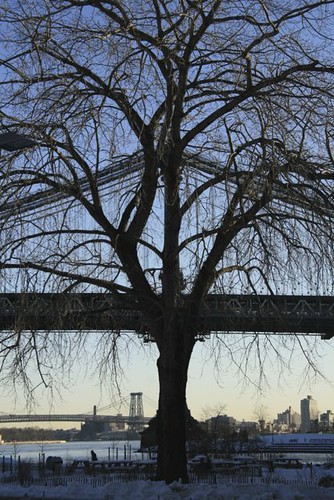
The environment in which sisters Marnie and Nelly find themselves does indeed look poisoned beyond hope. How can anything survive? This is working class Glasgow and the girls are alone. The book opens with one of the better first paragraphs I have read.

Today is Christmas Eve. Today is my birthday. Today I am fifteen. Today I buried my parents in the backyard. Neither of them were beloved.

Marnie’s little sister Helen, aka Nelly, has gone and done it. Put the pillow over her father, Gene’s, drugged out face and completed for him the self-destruction he had made his life work. He would abuse her and Marnie no more. Mom, Izzy, made another in a lifetime of awful decisions and headed off to the shack to add her name to the list of those who have gone before. Consider it addition by subtraction. No more need to worry about all potential food money going up noses, into veins or being poured from amber bottles. No more concern about other sorts of abuse, too. But if the authorities find out, the girls will be separated for sure, tossed back into foster care, with who knows what sorts. The solution? A quiet back-yard burial. Who is to take care of these two?

I suppose I’ve always taken care of us really. I was changing nappies at five years old and shopping at seven, cleaning and doing laundry as soon as I knew my way to the launderette and pushing Nelly about in her wee buggy when I was six. They used to call me wee Maw around the towers, that’s how useless Gene and Izzy were. They just never showed up for anything and it was always left to me and left to Nelly when she got old enough. They were never there for us, they were absent, at least now we know where they are.

Author Lisa O’Donnell grew up in public housing to very young parents. In an interview with Powell’s (link at bottom) she talks about the Thatcher-era environment in which she was raised. The primary inspiration for this story came from her days in Scotland, but they were reinforced when she saw similar horrors after she crossed the pond and was living in East LA, children put in charge of children, wastrel parents, childhood denied.

Across the fence lives an old man, Lennie, still mourning the loss of his soul mate of forty years. That boy from whom he sought temporary comfort in the park was not as old as he claimed and now Lennie must endure vandals spray-painting his property and enduring the shame of being on a sex offender list.

Actual parents do not come across very well in O’Donnell’s world. Teacher sorts are a mixed lot and the state agents base their actions on formulae instead of reality. O’Donnell paints a very bleak portrait of working class life in Glasgow. The girls have been damaged by their upbringing. Marnie helps a local drug dealer and relieves her stress with shagging. Nelly insulates herself from the world by speaking in a queenly manner. She plays the violin beautifully but completely freaks out when encountering reminders of her precarious state.

Will the girls be able to keep their ruse going long enough for Marnie to reach 16, when the state will consider her an adult and allow her to legally take care of Nelly?

When the girls’ long-absent grandfather pops into the picture, looking to atone for a lifetime of being a bloody horror, things get even more complicated. He may mean well right now, but born-again or not, this is the guy who had a hand in creating one of those awful parents. His sobriety is not to be presumed, and there is a history of abandonment and violence to boot.

Marnie’s friends add to the pile of woe, coping with their own missing family members, and travails of one sort and another.

There is enough sadness here to fill a cemetery, but there is sweetness to come.

As dark as things appear, a glimmer of light shines through. Lennie is not only no sexual predator, he is just a lonely man with a need to care, and care he does, slowly taking the girls in, offering them the sort of loving home life they had never experienced from their biological parents.

There is plenty of tension in this book. Will Lennie’s dog, Bobby, succeed in his relentless mission, trying to dig up the buried remains? This bit does seem rather clichéd. Can Grandpa be trusted? Will the drug dealer kill them trying to retrieve money owed him by a dead parent?

I know, I know, it sounds pretty dark. And a lot of it certainly is, but there is such warmth in this book, such humanity, such caring, that you will be cheering by the end. Can Lennie’s light shine these girls past the darkness? And there is redemption from another quarter, as Marnie provides the vehicle for a baddie to tuck away his stinger.

These are teenagers and that means coming of age. The sisters in O’Donnell’s tale begin at somewhat extreme ends and move towards each other over the course of the story. Marnie, world weary at fifteen, with the help of people who actually care about her, despite some self-destructive behavior, begins to find her inner softness, her inner vulnerability, her inner child. The decidedly odd Nelly matures, moving from being a very dependent child to someone with much more appreciation for the world and her place in it.

There are multiple, alternating narrators here. Lennie talks to his dead love, Joseph. Marnie and Nelly narrate their sections as well, and speak in distinct and appropriate voices. O’Donnell is a screenwriter, so has a keen ear for dialogue.

There are some rough edges here. Nellly is described early on as a Harry Potter fanatic, but nothing much is made of it after that mention. The girls manage some significant work in places where it is surprising that their labors go undetected. O’Donnell relies too much on coincidence in constructing her climax. Would this or that person really have shown up where and when they do? Nevertheless the beauty here is in how two damaged, abandoned girls can be welcomed, nurtured, and allowed a real home and how a lonely soul can provide it, constructing the family they all desperately need. There is plenty of redemption to go around in this dark place. I was reminded a bit of Cormac McCarthy’s The Road, another tale that casts love and hope against an intensely bleak background, the better to draw our attention to the light. The Death of Bees may not be a perfect book but does celebrate the triumph of hope over despair, and it is certain to generate a lot of buzz.

========================================EXTRA STUFF

There are a few interviews I came across that add to one’s appreciation of this book.

USA today from December 2012

NPR from January 5, 2013

Powell’s

Leave a comment

Filed under Literary Fiction, Reviews